

11 Communities Join a Growing Movement for Rural Innovation
The Center on Rural Innovation (CORI) is welcoming its largest cohort ever to the Rural Innovation Network, a sign of the growing momentum, ambition, and possibility across rural America.
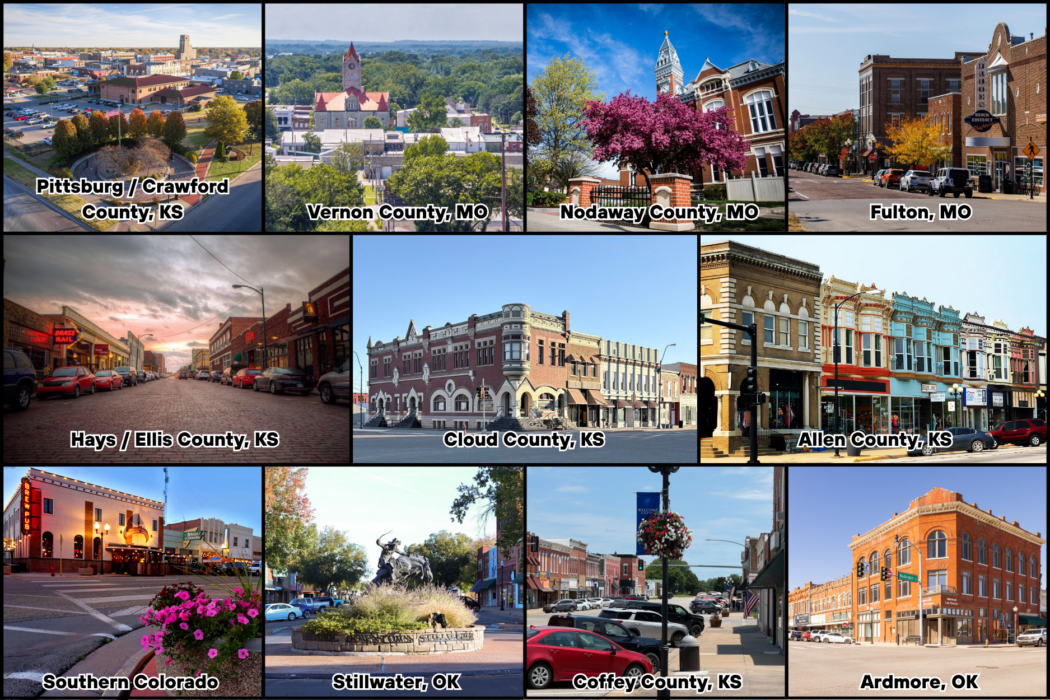
Eleven communities. Four states. A remarkable range of industries, institutions, ideas, and local strengths.
Today, 11 communities across Colorado, Kansas, Missouri, and Oklahoma are joining the Rural Innovation Network, the largest group to enter the Network at one time.
They are Southern Colorado; Allen County, Cloud County, Coffey County, Hays / Ellis County, and Pittsburg / Crawford County, Kansas; Fulton, Nodaway County, and Vernon County, Missouri; and Ardmore and Stillwater, Oklahoma.
Across rural America, local leaders are connecting entrepreneurs with resources, creating pathways into tech careers, putting emerging technologies to work, strengthening existing industries, and building new opportunities from the assets already rooted in their communities.
These 11 places are doing that work in distinctly local ways, from autonomous aviation and advanced manufacturing to research commercialization, renewable energy, and agtech.
Together, they offer another powerful reminder that there is no single model for rural innovation.
“Rural communities aren’t waiting for the future to arrive; they’re building it. And they’re doing it by starting with the strengths already in place: their people, institutions, industries, and relationships. These 11 communities show what’s possible when local leadership, entrepreneurship, and technology come together around a shared vision for the future.”
Matt Dunne, CORI’s Founder and CEO
Built locally. Stronger together.
The communities joining the Rural Innovation Network are starting from different places and building toward different futures, but have a common vision for rural prosperity: rural innovation works best when it grows from the assets a community already has.
“Being ‘rural’ should never be a barrier to being ‘cutting-edge.’ When we say ‘Come Explore Our Energy,’ we aren’t just talking about our power plant or our history; we’re talking about the untapped potential of our people.”
Jenny Tatman, Director of Coffey County Economic Development
That belief is fundamental to CORI’s approach. Rural communities do not need to become something else to participate in the innovation economy. The opportunity is to connect what is already there in new ways. In practice, that means helping entrepreneurs grow, connecting people to tech careers, strengthening industries through innovation, and turning local strengths into new economic opportunities.
Communities can move further when they don’t have to figure everything out alone.
“Being part of a national network gives us the opportunity to learn from proven approaches, share what is working in our region, and bring new ideas, resources, and relationships back to the entrepreneurs, businesses, and partners we serve."
Brad Rowland, CEO of Emergent Campus in Southern Colorado
The Network gives rural leaders a place to compare notes, share what they are learning, borrow ideas, adapt them to local conditions, and build relationships with people tackling similar challenges hundreds of miles away.
“The power of the Network is that communities learn from each other rather than working in isolation. They’re bringing what they know, learning from what others are trying, and taking those ideas home in ways that make sense for their own communities. That exchange makes everyone’s work stronger."
Leah Taylor, CORI’s Director of Community Experience
With 11 new communities joining at once, that exchange gets much richer. There are more experiences to learn from and more ideas to build on.
That may be the clearest evidence of rural innovation’s momentum: communities are building the future together.
Meet the newest members of the Rural Innovation Network
Colorado
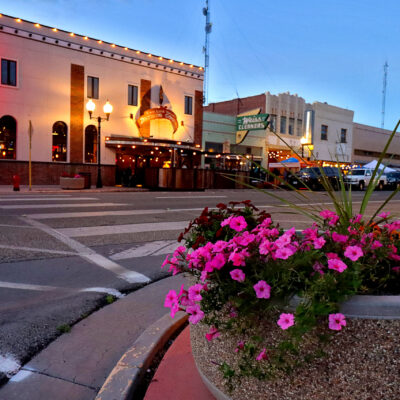
In Southern Colorado, distance is becoming a reason to collaborate, not a barrier. Across five counties, leaders are working to connect innovation spaces, colleges, workforce programs, and entrepreneurs into a regional ecosystem designed to make opportunity travel farther than any one town or institution could take it alone. Learn more about Southern Colorado.
Kansas
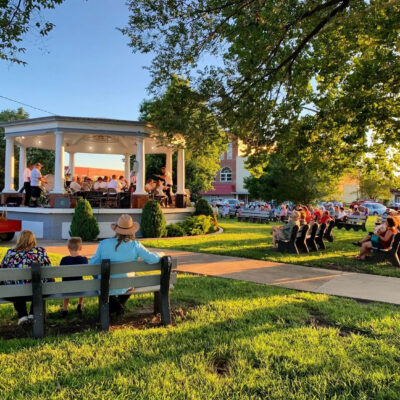
Allen County is working to reimagine its economy without leaving its roots behind. A place built on manufacturing is looking at automation, robotics, data, and new technical skills not as a departure from its industrial legacy, but as the next chapter of it. Learn more about Allen County, Kansas.
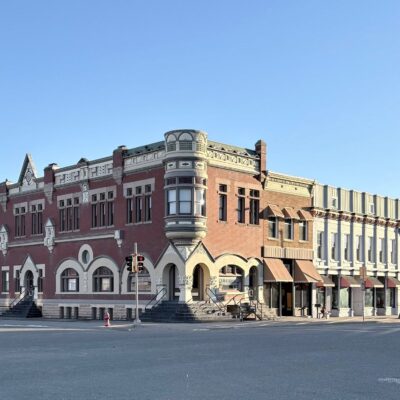
Cloud County is asking ambitious “what if?” questions, and then putting them to work. From renewable energy to autonomous drones that could support healthcare delivery and emergency response, the county is turning emerging technology into practical possibilities for rural life and work. Learn more about Cloud County, Kansas.
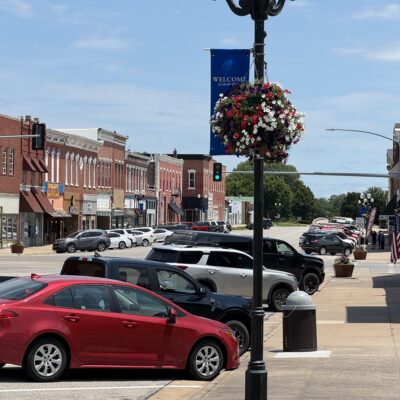
In Coffey County, “energy” means more than the power generated at Kansas’ only nuclear plant. It is also the technical expertise, homegrown companies, and confidence fueling a new generation of advanced manufacturing, electronics, engineering, and cybersecurity. Learn more about Coffey County, Kansas.

Hays and Ellis County know something about economic reinvention. After the loss of a major employer decades ago, the community made a long-term bet on diversification; today, that choice is visible in a growing ecosystem where students, entrepreneurs, technologists, manufacturers, and remote workers have more places to experiment, build, and stay. Learn more about Hays and Ellis County, Kansas.
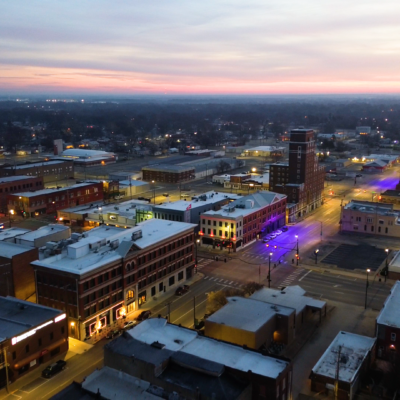
In Pittsburg, entrepreneurship has become part of the life of downtown. Projects like Block22 have brought students, founders, businesses, makers, and community activity together in one place, reflecting a broader culture in Crawford County of thinking big, investing together, and making new ideas visible. Learn more about Pittsburg and Crawford County.
Missouri
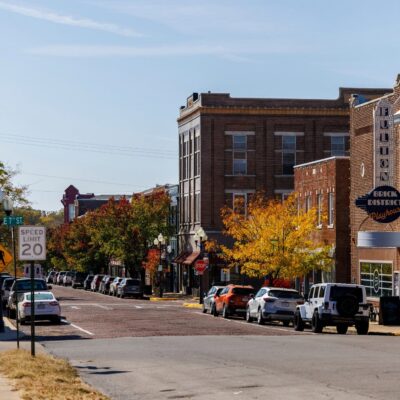
Fulton has a history of showing that ideas from a small place can resonate far beyond it. Today, the community is working to channel that same spirit into a new generation of entrepreneurs, tech businesses, students, and remote workers who can build ambitious careers and companies from Fulton. Learn more about Fulton, Missouri.

In Nodaway County, the future of work is already visible on factory floors, university campuses, and in classrooms. Advanced manufacturers are using automation, engineering, and robotics while local educators are helping students see that sophisticated technical careers do not require leaving northwest Missouri. Learn more about Nodaway County, Missouri.
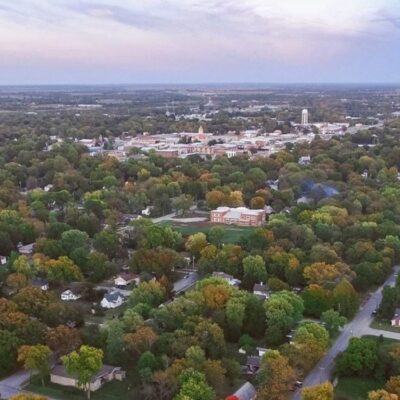
A technology company based in tiny Sheldon, Missouri, is serving agricultural customers far beyond Vernon County, and that possibility captures where the county is headed. Local leaders are working to create the conditions for more people to do the same by connecting ideas, entrepreneurs, education, workforce, capital, and community support across the county. Learn more about Vernon County, Missouri.
Oklahoma
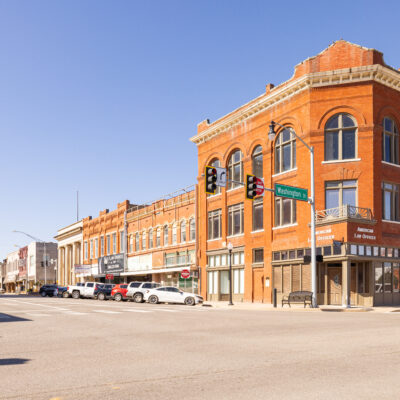
Ardmore has a long history of turning existing strengths into new economic possibilities, perhaps nowhere more visibly than at a former military air base now positioned for aerospace, manufacturing, and logistics. Today, the community is applying that same instinct for reinvention to entrepreneurship, with new attention on helping early-stage businesses and ideas take root. Learn more about Ardmore, Oklahoma.
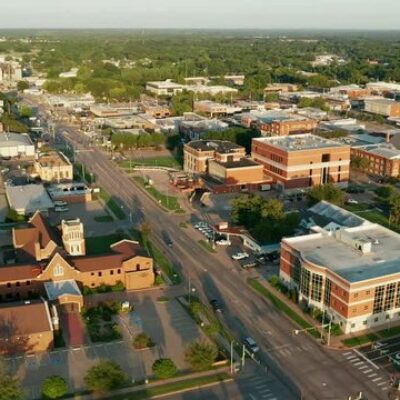
Stillwater is showing what’s possible when a community’s research, talent, workforce, and entrepreneurial strengths begin to connect around a shared vision for growth. With world-class research, technical training, commercialization resources, and entrepreneurial support already concentrated in one community, the opportunity now is to turn that remarkable density of talent and ideas into even greater economic opportunity for Stillwater and the surrounding region. Learn more about Stillwater, Oklahoma.