


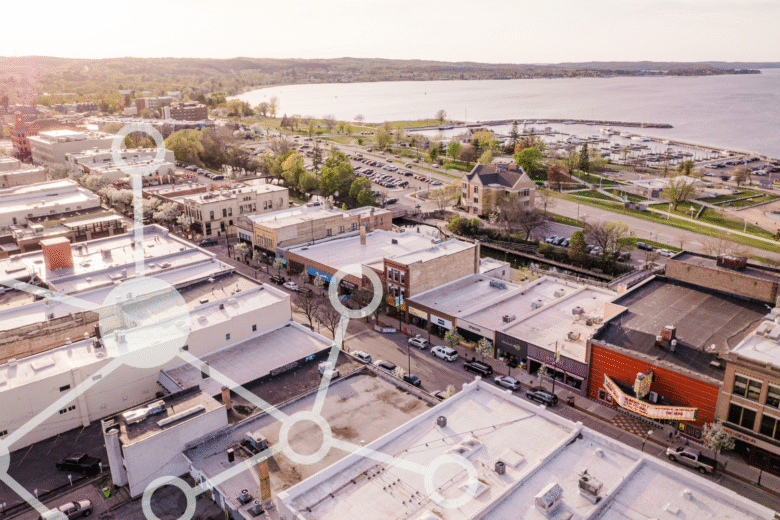
Where capital flows—and where it does not—has long shaped the trajectory of rural communities.
Across rural America, patterns of public, philanthropic, and private investment have influenced economic opportunity, quality of life, and long-term prosperity. Yet these patterns are rarely examined together or understood in ways that illuminate how geography shapes access to resources. Building a clearer picture of how capital is distributed—and where gaps persist—is essential to strengthening rural economic and social outcomes.
The Capital Exposure Project, funded by the Robert Wood Johnson Foundation, brings together research, data analysis, and storytelling to examine how investments across geographies has shaped rural communities, with a focus on equity and inclusion. By highlighting structural disparities in access to capital and bringing new visibility to the intersections of place, race, and class in rural contexts, the project aims to generate clearer data and practical insights that can inform more equitable approaches to investment and deepen understanding of rural access to capital.
Capital Exposure Project Research Series
This work is unfolding as a three-part research series. The two installments, focused on private capital and public capital, are now available. A report examining philanthropic capital will be released later this year.
-
Private CapitalOur report "Rural America’s Struggle to Access Private Capital" explores how gaps in private capital—from community bank lending to venture capital—limit rural entrepreneurship and widen the rural-urban economic divide.
-
Public CapitalOur report, "Uneven Ground: Local Public Funding Gaps Between Rural and Nonrural America," shows that rural communities receive less locally controlled public funding for infrastructure, workforce development, and economic growth.
-
Philanthropic CapitalTo be released.
About our partner
Robert Wood Johnson Foundation: The Robert Wood Johnson Foundation is committed to improving health and health equity in the U.S. In partnership with others, it is working to develop a Culture of Health rooted in equity that provides every individual with a fair and just opportunity to thrive, no matter who they are, where they live, or how much money they have.