From Shared Vision to a Working Talent Pipeline: RISE Caldwell-Watauga Takes Off
Less than a year after regional partners came together to strengthen work-based learning in Caldwell and Watauga counties, RISE Caldwell-Watauga is already connecting more than 120 students with employers across western North Carolina.
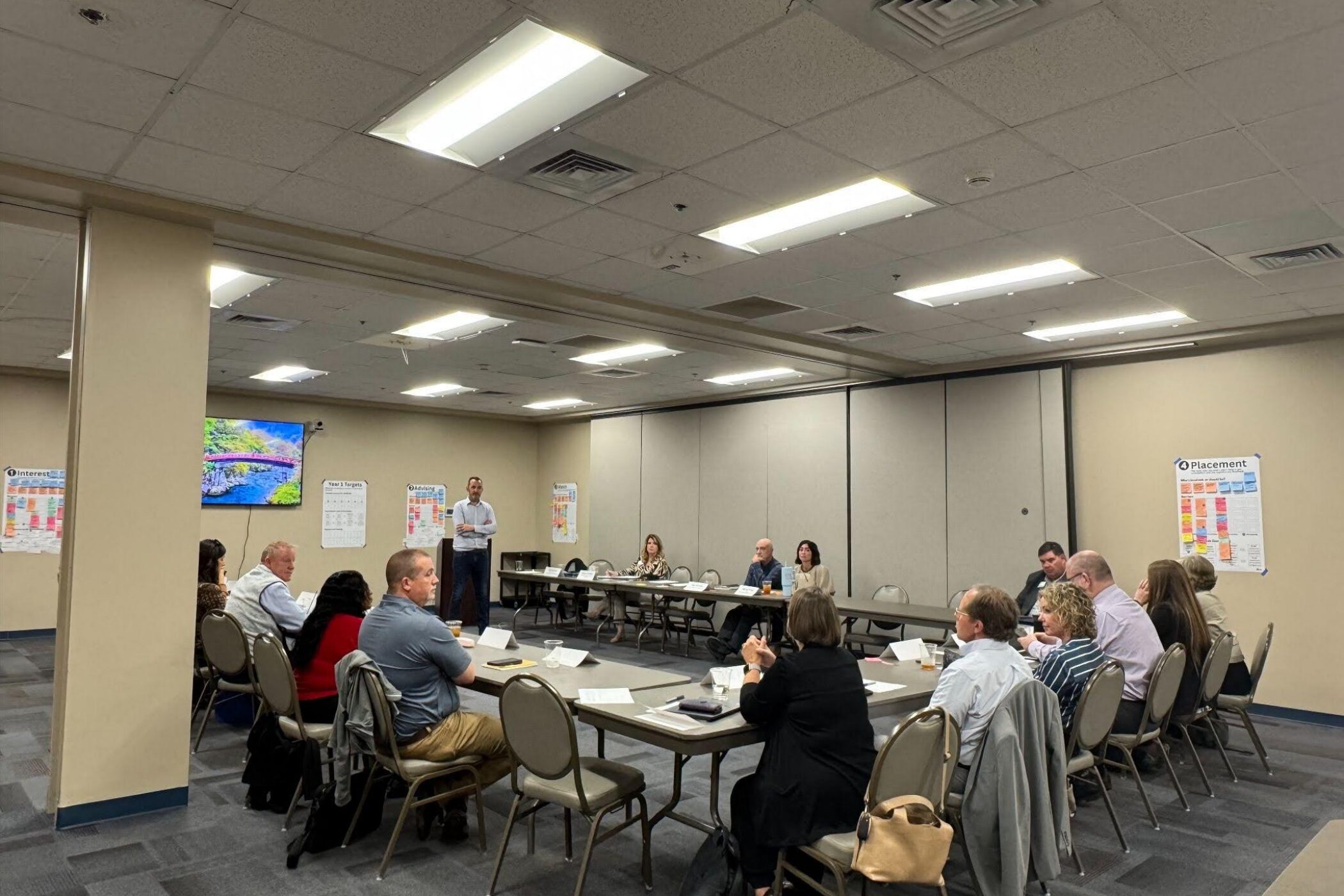
In October 2025, leaders from education, economic development, workforce organizations, and local employers in Caldwell and Watauga counties gathered around a deceptively simple question:
How do we make it easier for a young person to see a career opportunity close to home, prepare for it, get through the door, and turn that experience into something that lasts?
The region already had many of the necessary pieces. Schools were investing in career-connected learning. Caldwell Community College and Technical Institute (CCC&TI) offered training and credentials. Employers needed talent and were willing to engage. Economic development and workforce organizations had relationships across both counties.
The opportunity was there. What partners needed was a clearer way to connect it.
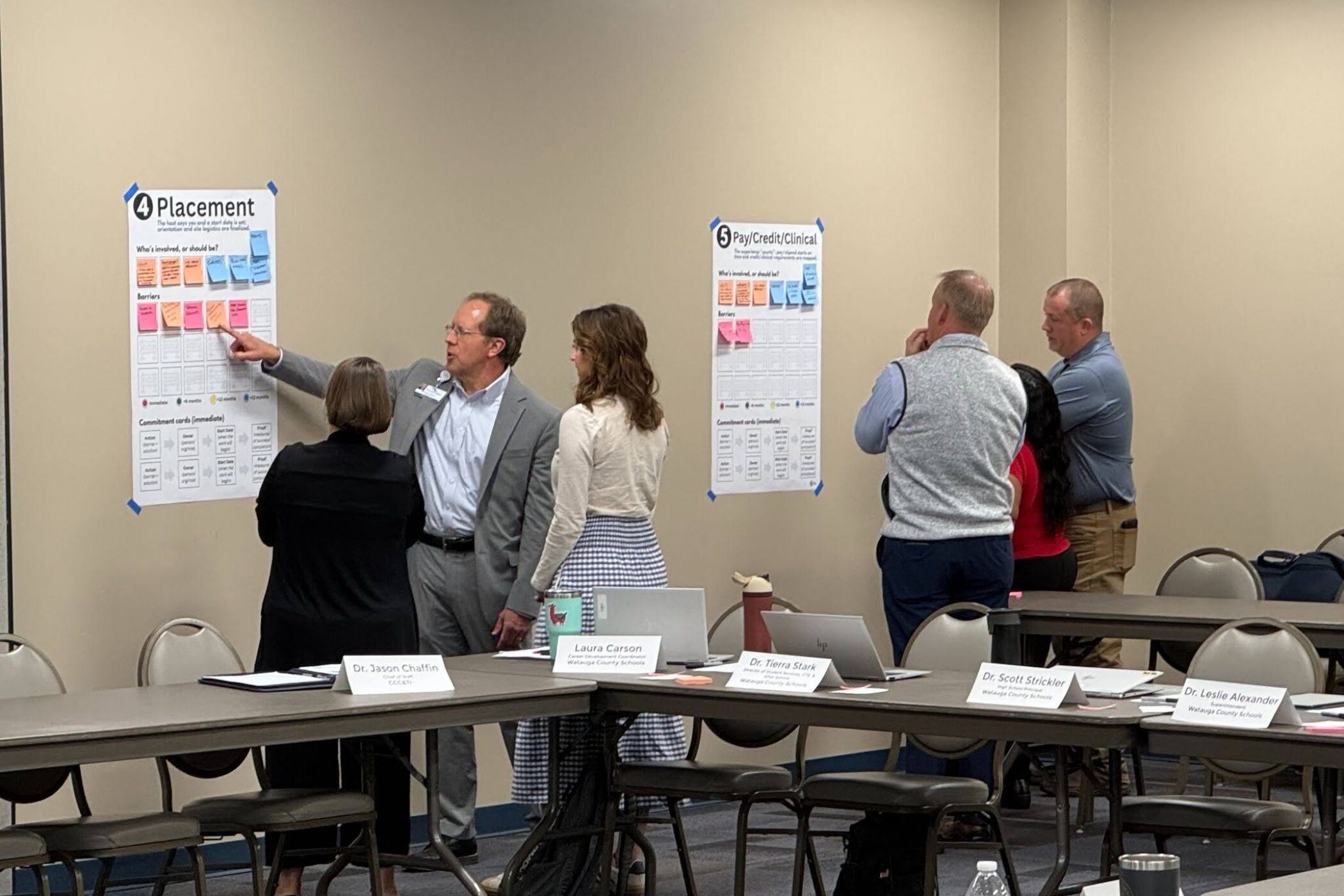
Working with the Center on Rural Innovation (CORI), regional partners mapped the journey a student would need to take from initial career interest to employment. The resulting framework followed seven stages: Interest → Advising → Match → Placement → Pay/Credit/Clinical → Completion → Hire. Partners identified where handoffs broke down, clarified roles across organizations, and developed practical tools and priorities they could put to work immediately.
Less than a year later, that framework is no longer sitting in a strategy document.
It is operating.
A regional system takes shape
RISE Caldwell-Watauga—theRegional Initiative for Skilled Employment—now works across the two-county region to connect students with meaningful work-based learning opportunities and local employers.
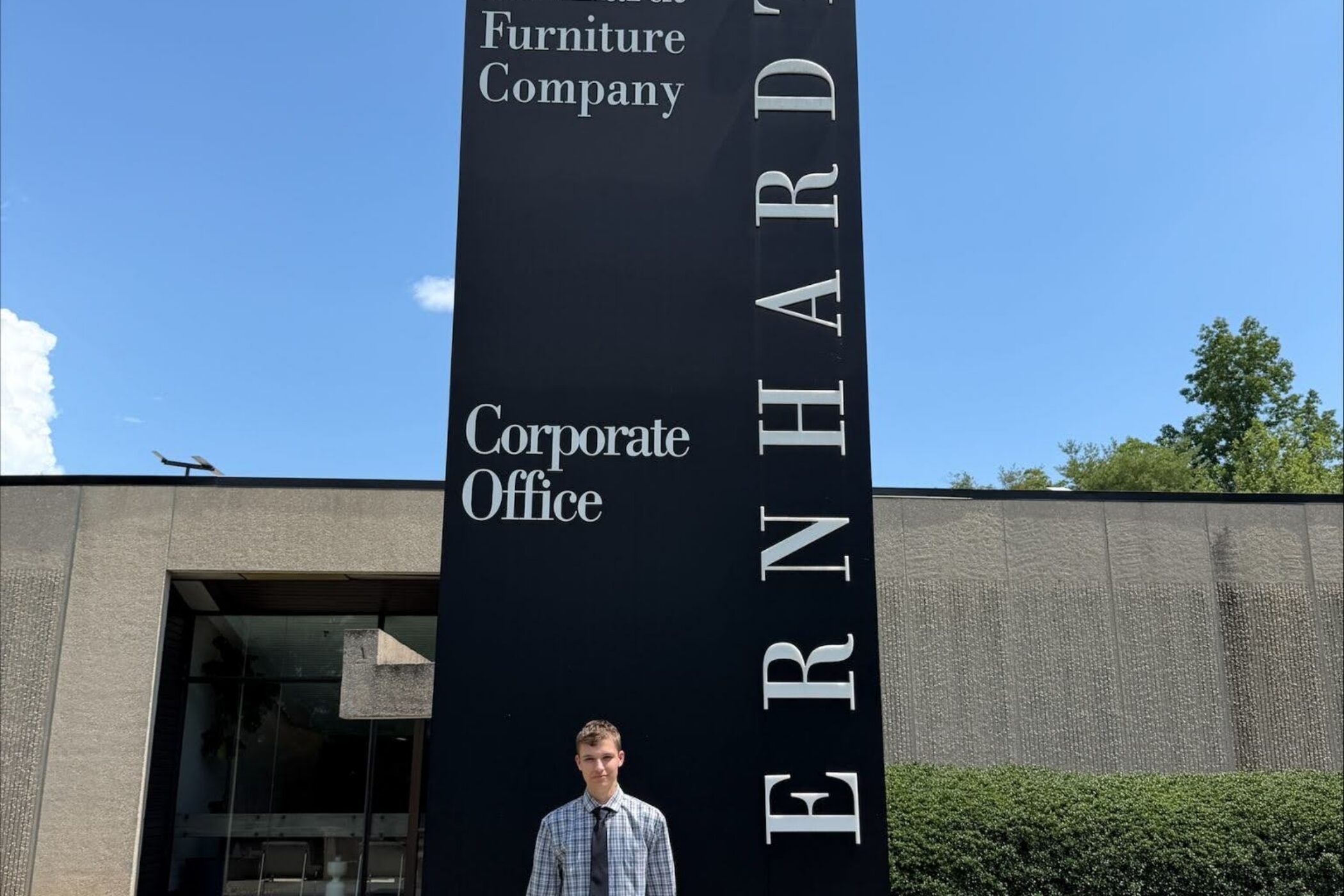
By late summer 2026, RISE had facilitated more than 120 student placements across spring, summer, and fall programming and built a network of more than 60 employer partners. Opportunities now span healthcare, skilled trades, advanced manufacturing, hospitality, government, business services, veterinary care, education, and other fields.
The pace of growth has considerably exceeded the expectations partners set a year earlier.
RISE’s original Year 1 participation goal was 45 students across the two counties. Spring and summer programming alone produced 88 student experiences, nearly twice that target, before the fall cohort was included.
But the numbers only tell part of the story.
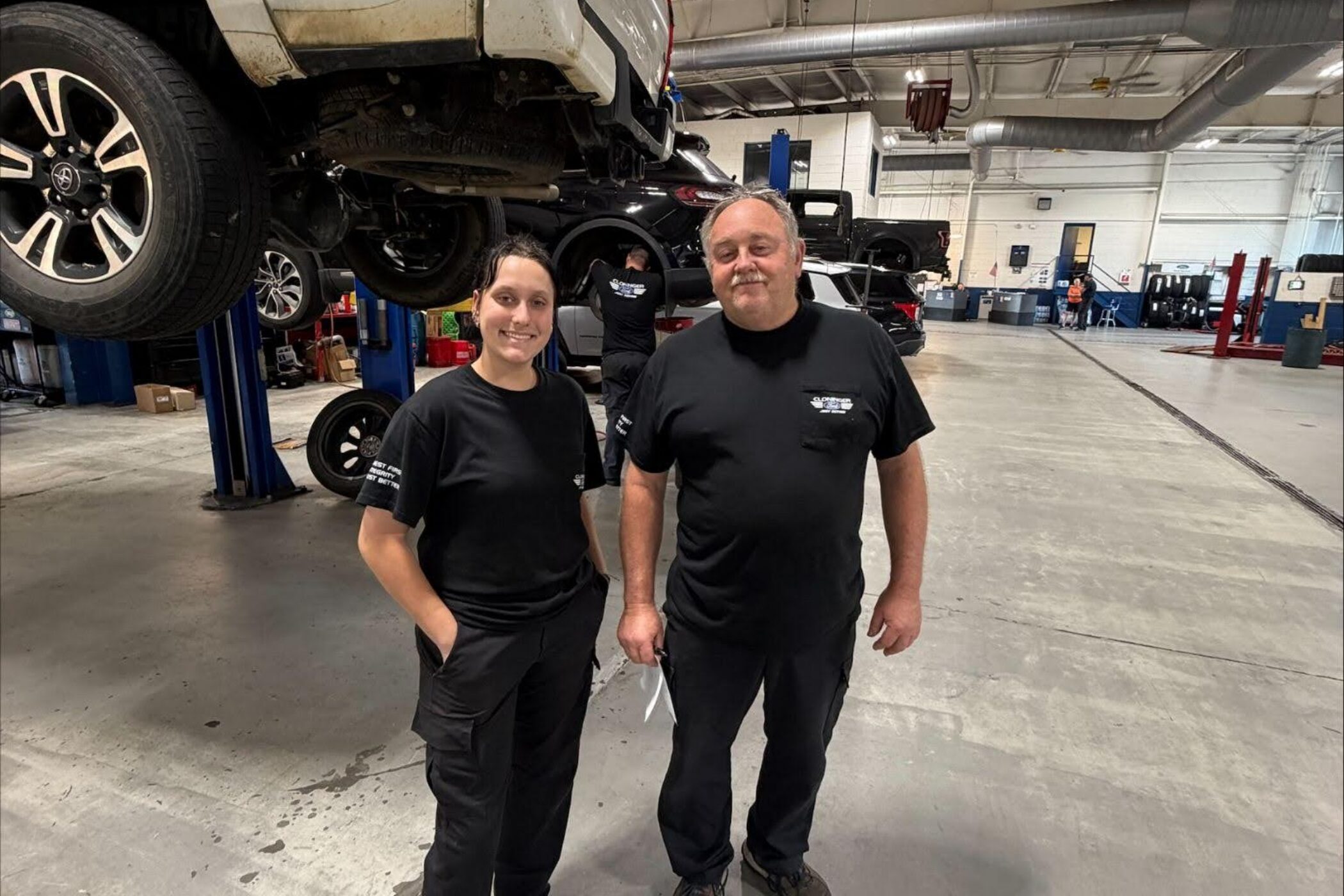
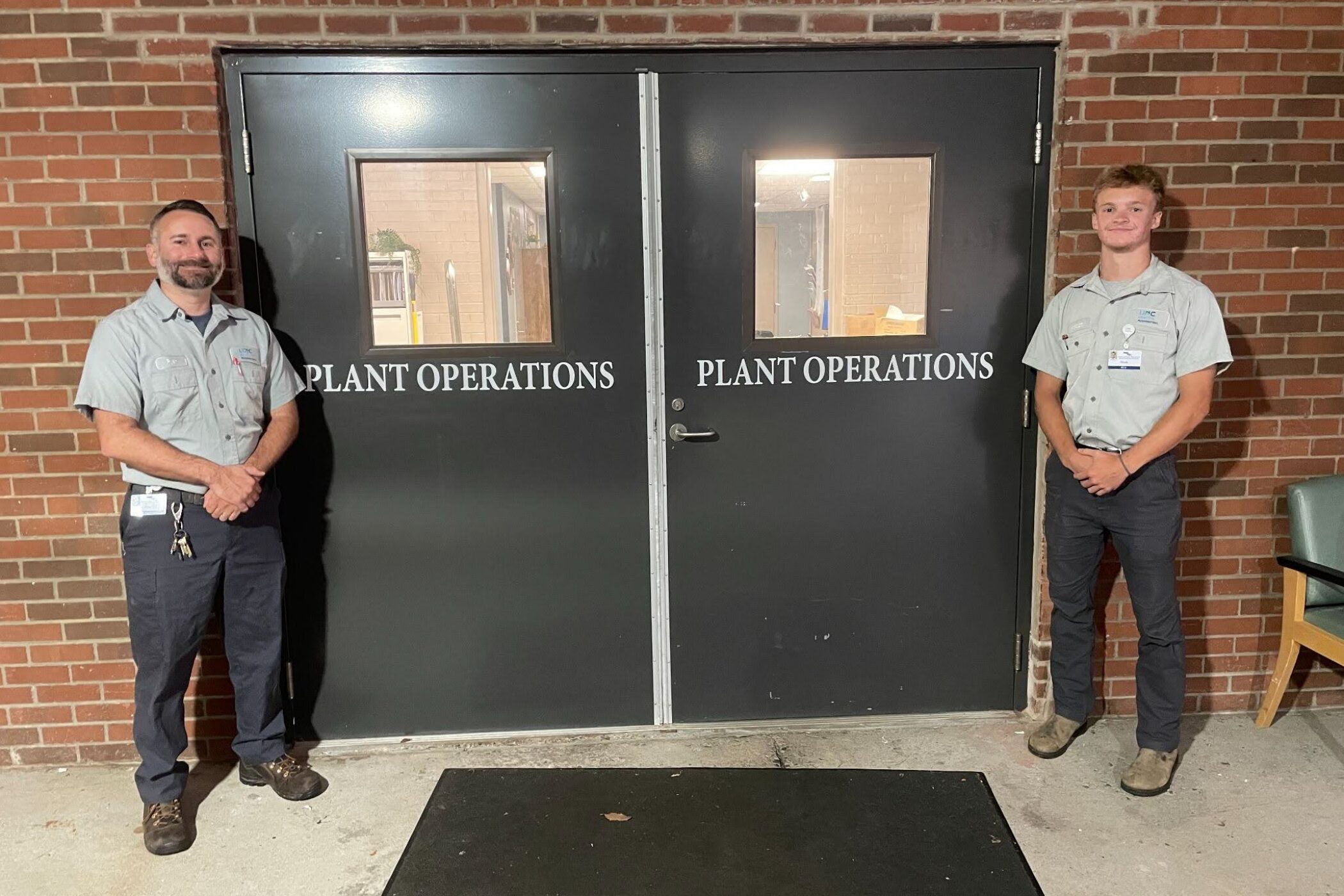
Students are entering internships, pre-apprenticeships, registered apprenticeships, clinical experiences, and other career-connected opportunities. More than 70 percent of placements have been paid, while funding is also helping cover transportation, uniforms, supplies, and other costs that can otherwise prevent a student from participating.
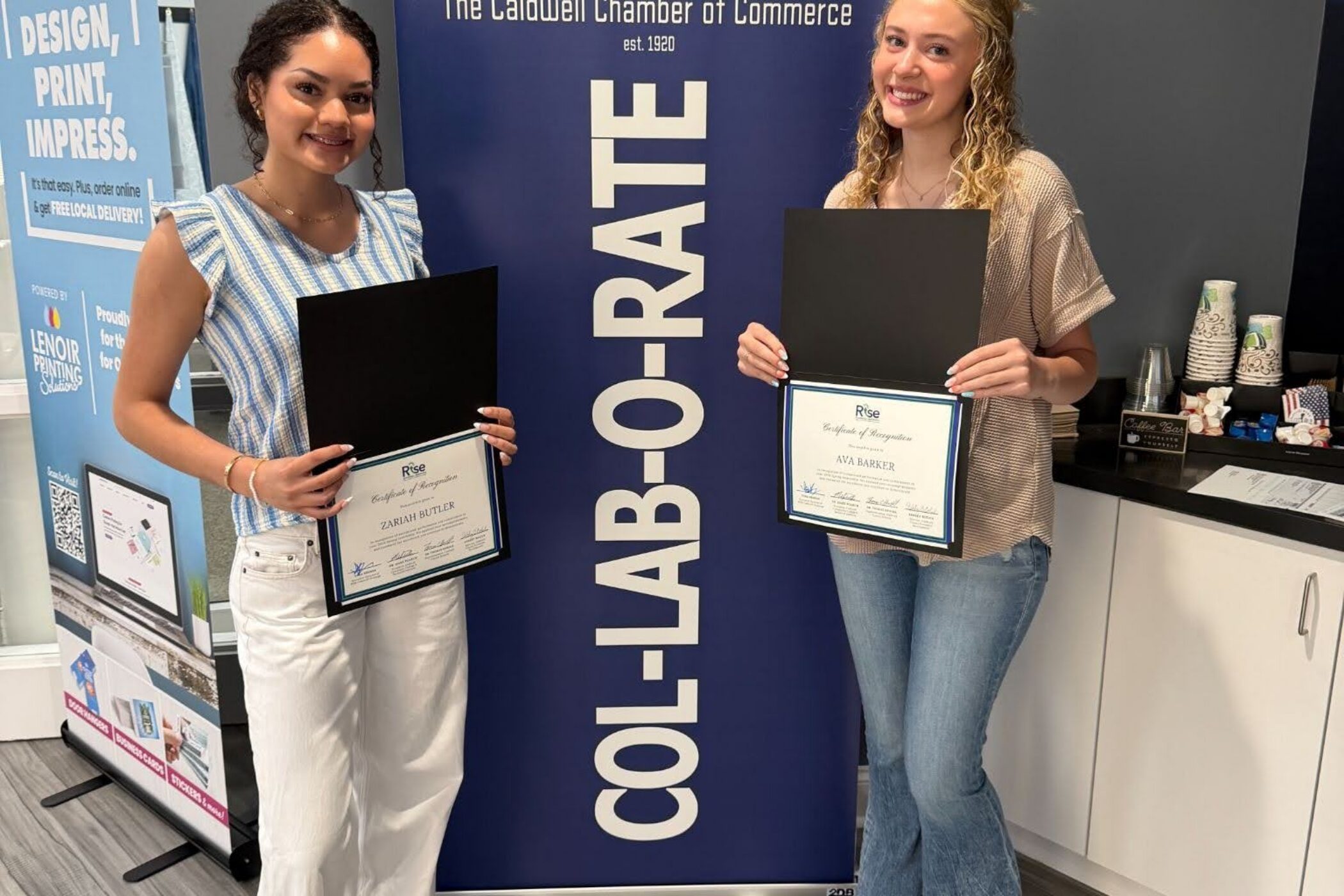
Some students have already moved from a RISE experience into employment with their host organizations. Others have progressed into registered apprenticeships or continued education.
That transition is exactly what the original strategy was intended to create.
Use the next/previous buttons to view a series of images and captions.
Making careers tangible
For RISE Executive Director Tara Brossa, one of the biggest impacts is giving students the chance to test a future career while they are still preparing for it.
“We’re giving students the opportunity to pursue something live rather than just in concept.”
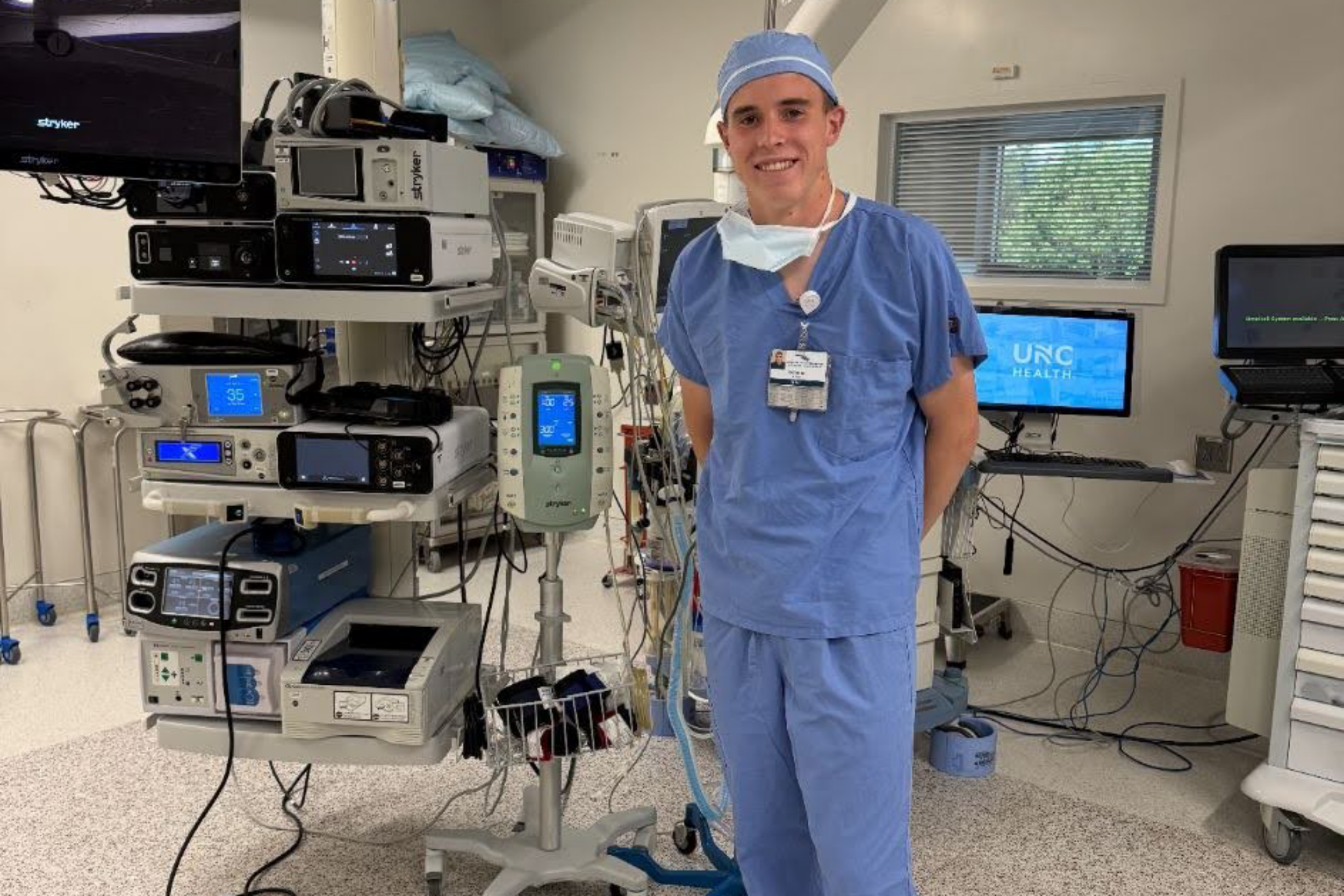
A student interested in nursing, for example, does not have to rely solely on coursework to understand what a healthcare career might look like. Through RISE, that student can begin working within a healthcare setting, build relationships with professionals, and better understand both the career and the workplace before completing their education.
The same principle applies to skilled trades, manufacturing, information technology, hospitality, and other sectors.
RISE has even begun creating opportunities that cross traditional organizational boundaries. One aspiring PLC programmer, for example, was being connected to experiences with both Aiken Controls and global manufacturer Minda, giving the student exposure to different sides of advanced manufacturing and industrial technology.
These experiences are intentionally designed to resemble employment rather than career observation. Students are expected to show up, contribute, communicate professionally, and learn alongside the people already doing the work.
That distinction matters to employers too.
Employers are coming back
Many participating employers had never hired someone under 18 before joining RISE.
According to Brossa, some initially viewed hosting a high school student as a significant risk. The results have changed perceptions.
Employers have reported being surprised by the maturity and readiness of participating students, and most early partners have either offered students opportunities to return or expressed interest in hosting another participant.
That response matters because RISE is ultimately a workforce strategy.
The program serves students, but its longer-term goal is to help employers build relationships with future workers and help young people see that meaningful careers exist in the region where they already live.
As Brossa puts it, the question does not end with where a student goes to school.
It is also: Where are they going to work when they are done?
That employer connection has become one of the strongest signs that the model is beginning to take root.
Some businesses that initially chose not to participate have since approached RISE after seeing the program operate and asked how they can become involved.
Strategy was the starting point
RISE did not begin from scratch.
Regional leaders drew inspiration from the Surry-Yadkin Works model in North Carolina and brought considerable local knowledge, relationships, and commitment to the effort.
CORI’s role was to help those partners step outside their individual organizations and design the system together.
Through stakeholder conversations and a regional workshop, partners identified the major friction points along the student journey, mapped responsibilities, and agreed on practical early actions. The work produced a vision brief, collaboration map, career-awareness strategy, and detailed recommendations for turning student interest into real placements.
Brossa says having an outside organization convene that work helped the region turn its ideas into an operating framework.
She has continued using the CORI deliverables alongside the Surry-Yadkin Works playbook throughout RISE’s first year.
Perhaps the clearest sign that the planning process worked is what did not change.
The seven-stage student journey developed during the 2025 workshop remains the backbone of how RISE thinks about its work today.
“The pipeline is exactly the way that it ended up landing,” Brossa said.
The original workshop group has also remained involved. Participants were invited into the RISE advisory committee, where they continue providing feedback, opening employer connections, and helping solve placement challenges across the region.
Use the next/previous buttons to view a series of images and captions.
Success creates the next challenge
Rapid growth brings its own problems.
RISE has received more student interest than available opportunities in some fields, particularly healthcare. The employer network must continue expanding. Processes that worked with a smaller cohort now need to function at a much larger scale.
Brossa also acknowledges that the program has reached the limits of what one person can coordinate.
RISE is exploring additional staff capacity, including an apprenticeship coordinator and workforce development support, while continuing to strengthen employer onboarding, student readiness, data tracking, and long-term funding.
Sustainability remains perhaps the largest question. The program currently relies heavily on philanthropic and time-limited funding, even as demand continues to grow.
Those challenges are significant.
They are also the challenges of a program that has moved quickly from idea to demand.
Less than a year ago, regional partners were standing around workshop tables asking how schools, employers, economic development organizations, and workforce partners could operate as one connected system.
Today, students are walking into hospitals, manufacturing facilities, businesses, workshops, government offices, and other workplaces across Caldwell and Watauga counties.
Employers are asking for more.
Students are coming back for the next step.
And a framework sketched out together in October 2025 is becoming part of how the region grows its own workforce.
That is the kind of progress worth celebrating.