

Small Towns, Big Ideas 2026: Five Bold Pitches, Two Big Wins, and a Future Built in Rural America
Journai takes the grand prize, Infinity Miles wins Audience Choice, and five founders show that industry-changing ideas can grow from small towns.
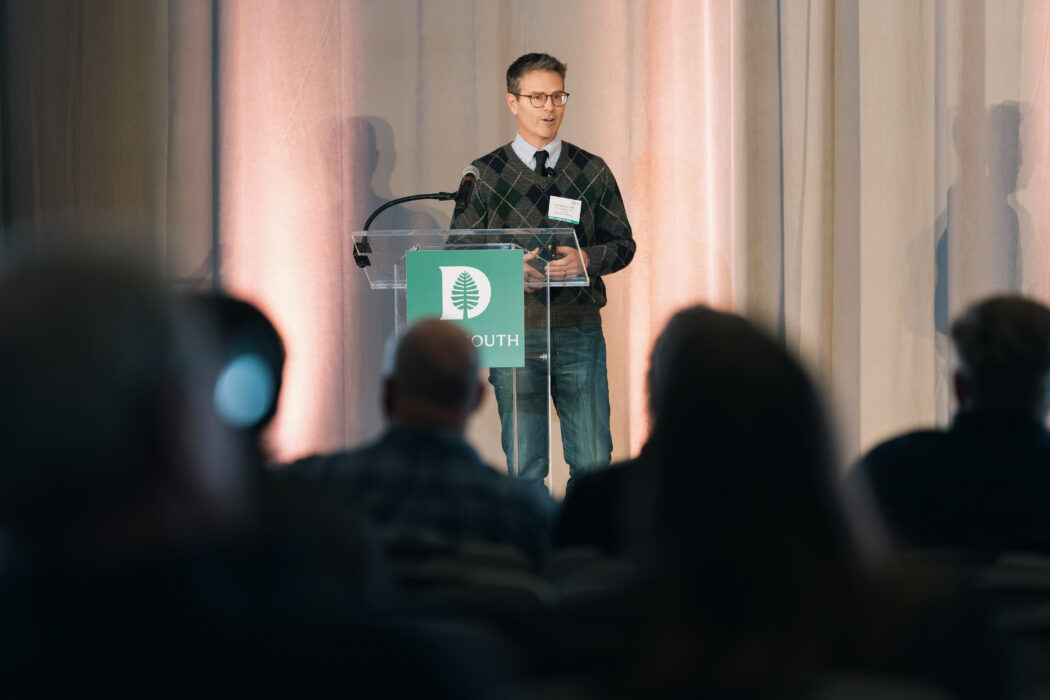
What do an AI assistant helping college athletes build stronger relationships, next-generation power infrastructure, and technology transforming local journalism have in common? They’re all being built by entrepreneurs in rural America. And last night, they were among the big ideas that took center stage in Hanover, New Hampshire.
On October 29, the Center on Rural Innovation (CORI) welcomed five entrepreneurs from across its Rural Innovation Network to the Grand Ballroom at the Hanover Inn on Dartmouth’s campus for the sixth annual Small Towns, Big Ideas Pitch Event, hosted in partnership with the Magnuson Center for Entrepreneurship at Dartmouth. Investors, rural leaders, and supporters gathered in the ballroom and tuned in online to celebrate ambitious companies being built far beyond traditional technology hubs.
And this year, there were two reasons to cheer: a $10,000 grand prize and, for the first time, a $1,500 Audience Choice Award decided by attendees and livestream viewers.
Watch the full event recording
And the winners are…
Grand Prize: Journai | Jeff Nyquist — Marquette, Michigan
Journai took home the evening’s grand prize for an AI-powered platform built around a deceptively simple idea: better conversations build stronger teams.
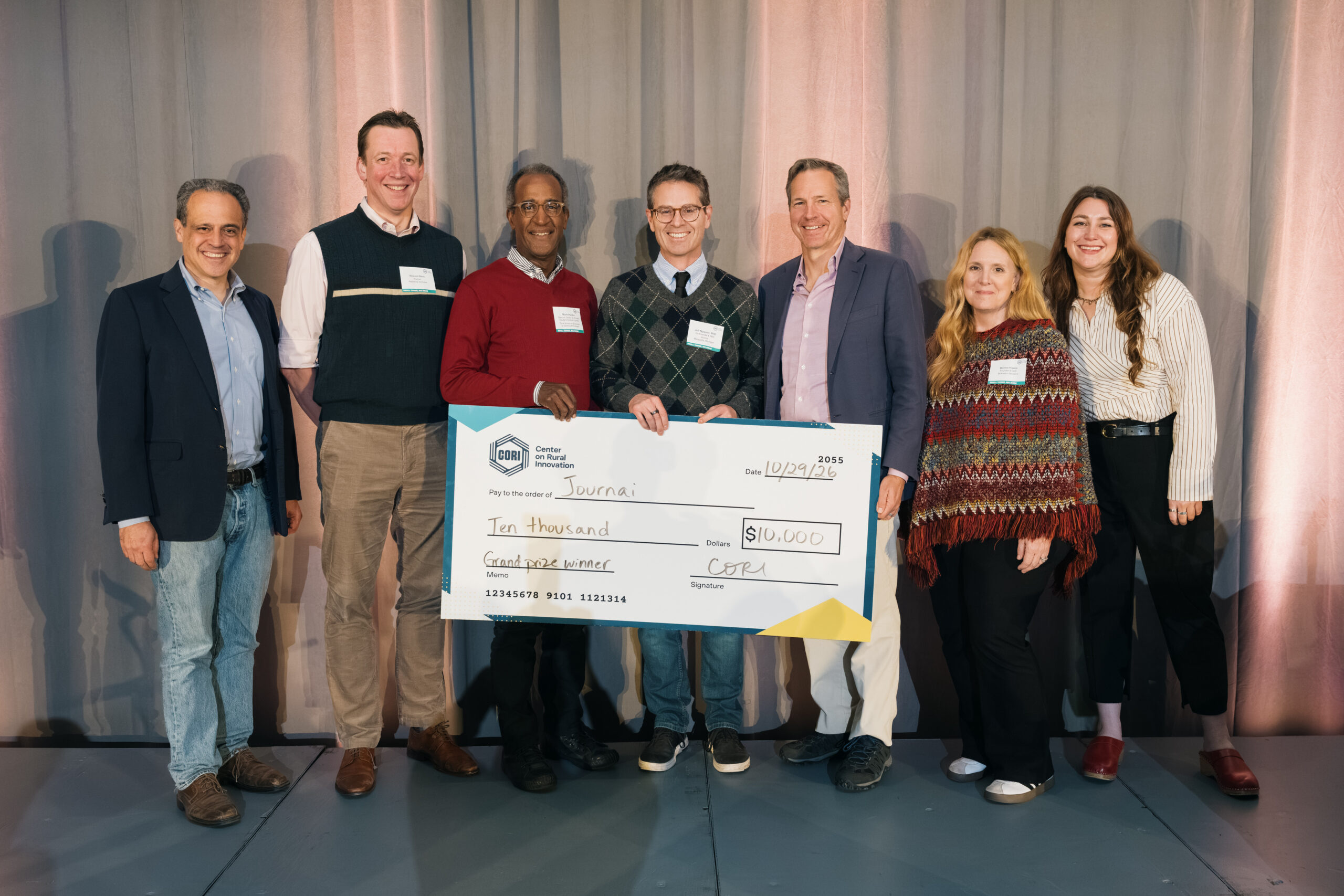
Co-founder and CEO Jeff Nyquist introduced Sam, an AI assistant that helps athletes and coaches navigate difficult conversations, strengthen trust, and turn private reflection into real-world connection. The idea grew in part from his co-founder’s experience as a college athlete whose relationship with a new coach disrupted what had been a thriving team experience.
Jeff shared an encouraging early result: in an NCAA-funded study, 62% of athletes said they brought a conversation with Sam into a real-life relationship.
“We believe that the next big thing in sports is less tech and more human empowerment,” Jeff said as he closed his pitch.
When his name was announced as the winner, he was genuinely surprised. But his first reflections weren’t about the prize money. They were about the founders he’d met through the event.
“Entrepreneurs are a very important tribe. And every time we get together, we can help each other and support each other,” he said.
That spirit of connection captured much of what made the night special.
Audience Choice: Infinity Miles | Pourya Shamsi — Rolla, Missouri
Infinity Miles earned the inaugural Audience Choice Award, with votes coming from the room and viewers joining virtually.
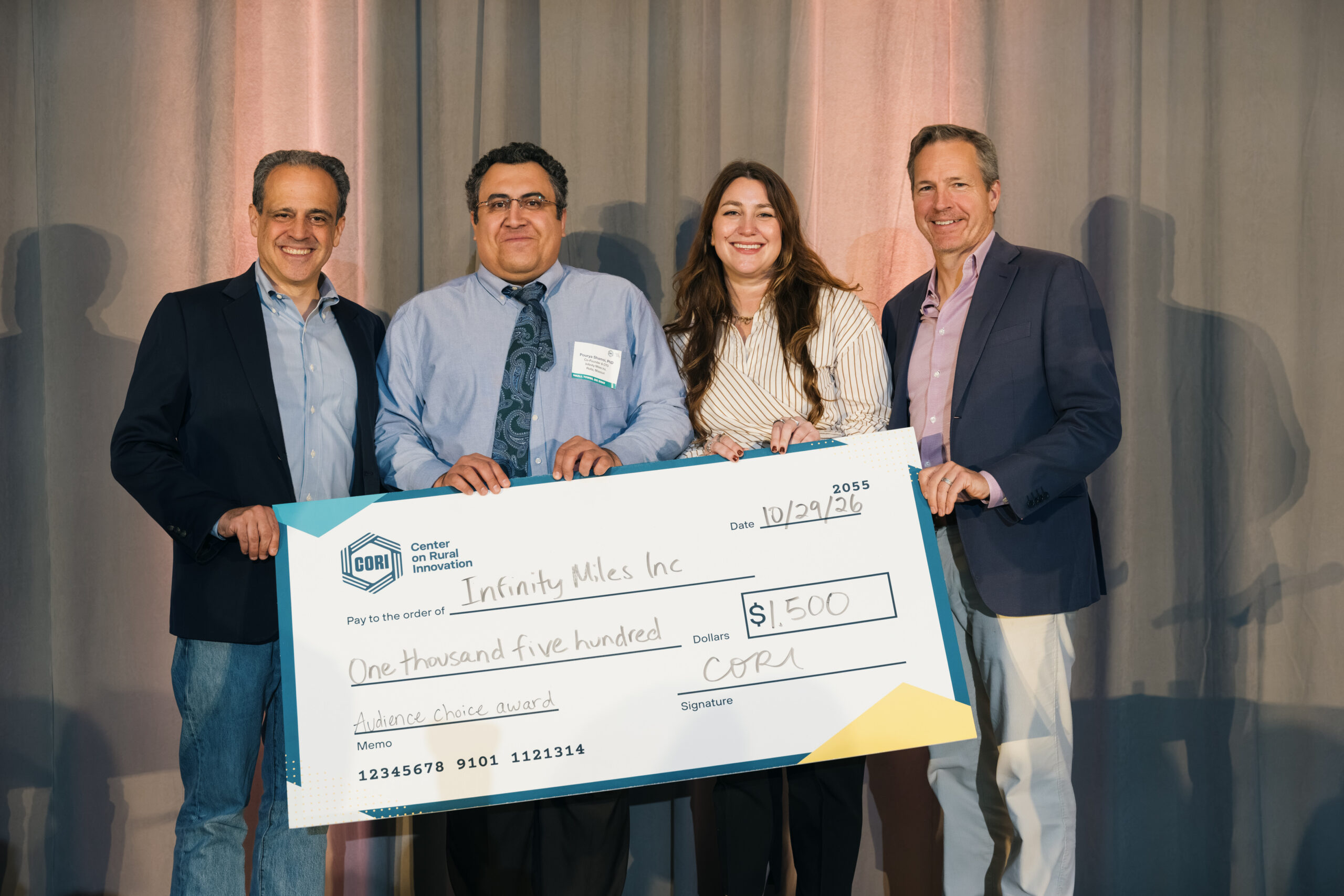
Co-founder and CTO Pourya Shamsi is rethinking the equipment that makes electrification possible. The company’s solid-state transformers could make power systems for data centers, EV charging, and renewable energy substantially smaller and lighter, while improving efficiency and shortening long equipment lead times. Pourya described a 60–80% reduction in weight and a 40–60% smaller footprint compared with conventional systems.
With traditional transformers facing years-long lead times, he pointed to a significant opportunity: “We can make our transformer right now in less than six months.”
The company manufactures in Bourbon, Missouri, and its international reach is already creating unexpected local benefits. Pourya shared that more than 60 visitors from countries including Japan, Taiwan, and Germany have traveled to the community, supporting local hotels, restaurants, and attractions.
For Pourya, being based in rural Missouri is an advantage, not a limitation.
“Rural Missouri allowed us to basically compete with some big players without having any initial capital funds,” he said.
An incredible field of innovators
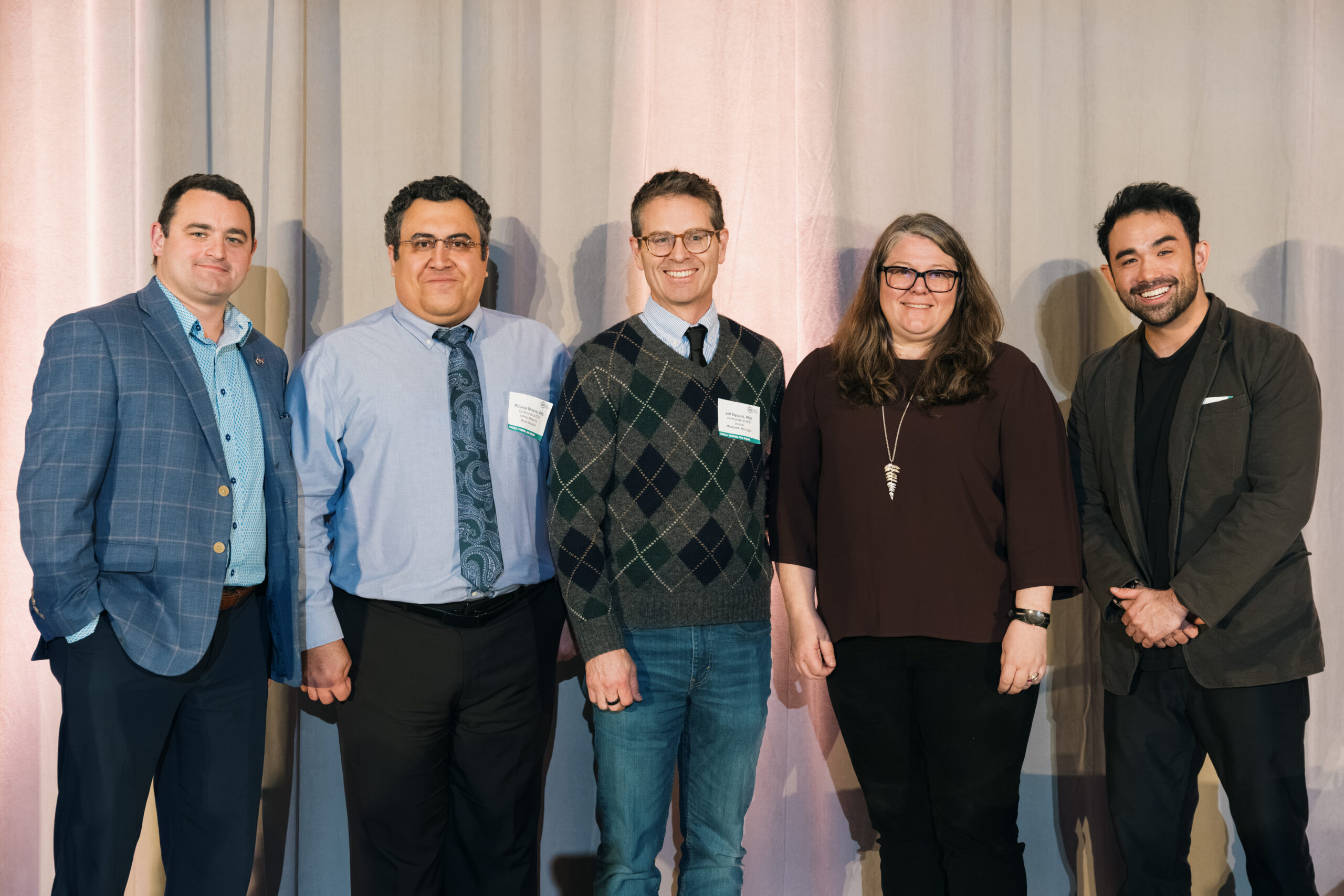
While Journai and Infinity Miles took home the awards, the strength of the entire field made one thing clear: rural America is home to entrepreneurs developing ambitious technologies with the potential to transform entire industries. From protecting the future of local journalism to strengthening human relationships and modernizing manufacturing, the evening showcased the remarkable breadth of innovation taking shape in small towns across the country.
PubGen.AI | Sho Rust — Cape Girardeau, Missouri
A third-generation publisher, Sho Rust knows what’s at stake when local newsrooms struggle. His company, PubGen.AI, uses AI to simplify the complicated systems behind digital publishing, subscriptions, archives, and even print production.
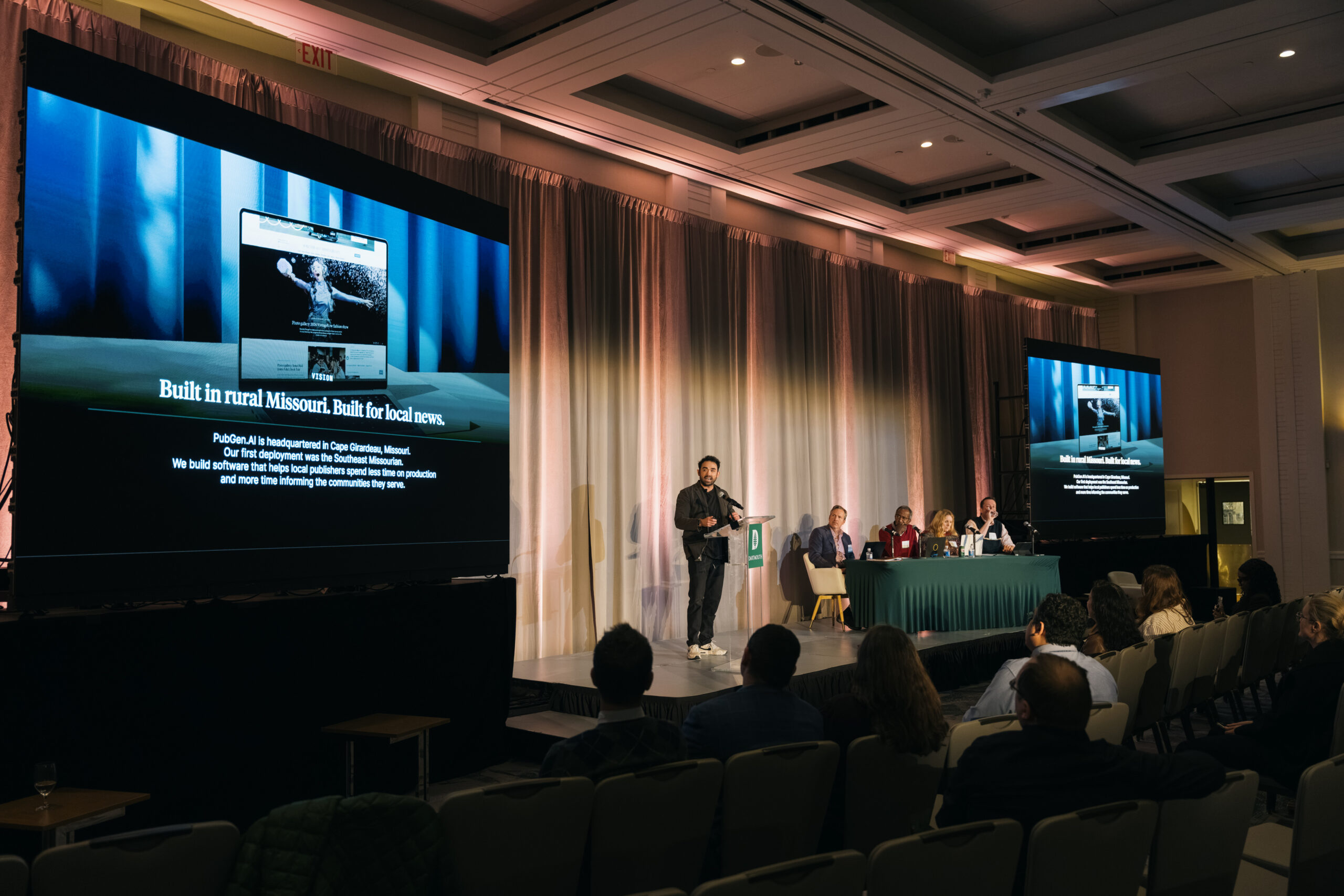
Instead of requiring a newsroom to juggle disconnected tools, the platform gives journalists more time to do what matters: report stories and serve their communities. Sho shared that the platform has already launched more than 100 publications and demonstrated how AI-powered archives can help readers find answers grounded in trusted local reporting.
“Stronger stories, greater impact. That’s what we’re all about,” he said.
For rural communities, where local journalism helps keep neighbors informed and connected, the impact could extend well beyond the newsroom.
AUSPEX Intelligence | Jenn Munsie — Adirondacks Region, New York
When major development projects come to rural communities, misunderstandings and broken trust can derail conversations before a deal is even on the table.
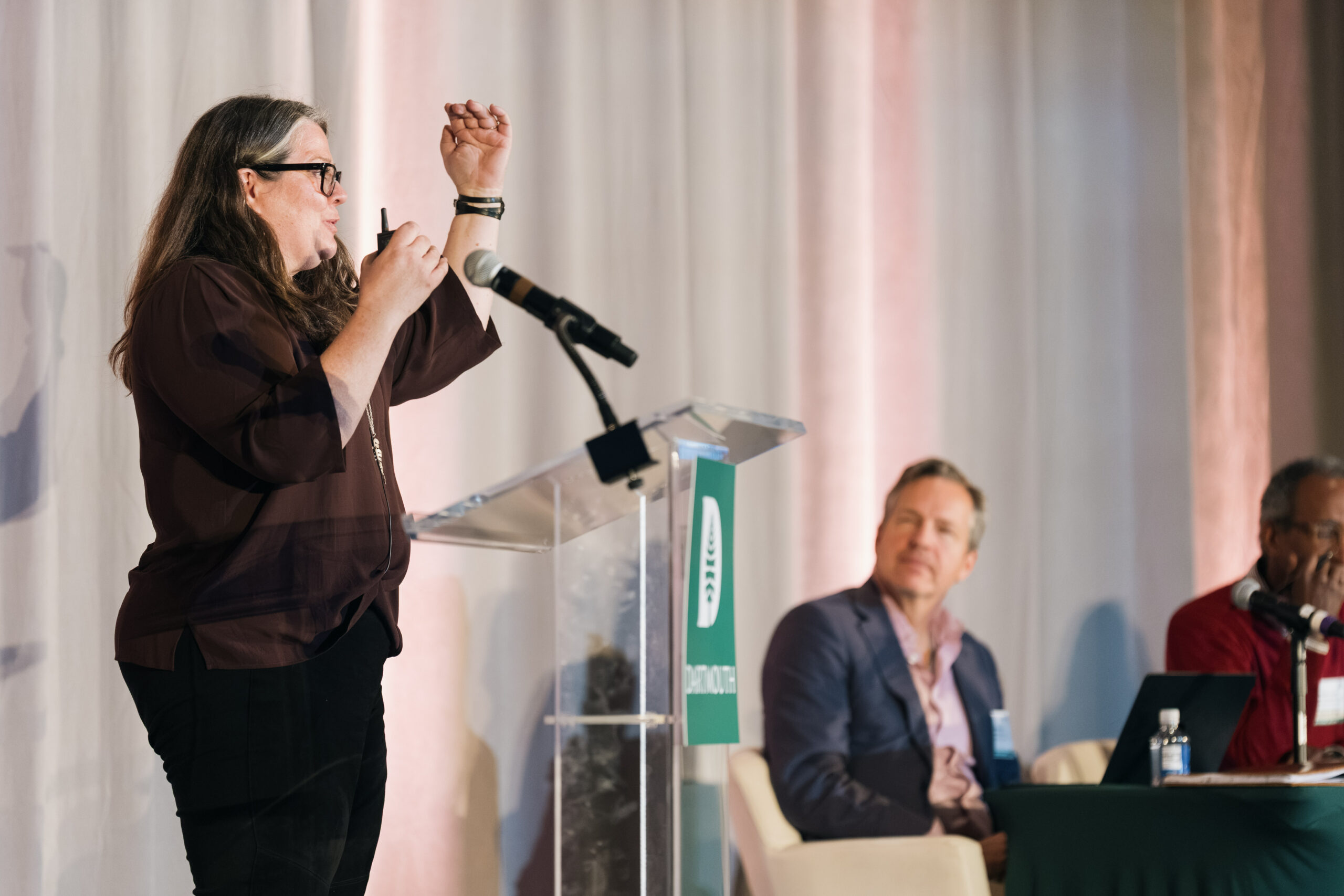
Jenn Munsie is building AUSPEX Intelligence to help change that. Its CounterMIND technology uses real stakeholder language and behavioral science to help people rehearse complex negotiations—whether they’re developers, community leaders, or other decision-makers.
As she put it, “It’s a flight simulator for rough conversations.”
Her goal is not to help one side win, but to make better outcomes and stronger relationships possible.
MotorVision | Elijah Jensen — Eastern Kentucky
What if the machines that power the manufacturing industry could tell us something was wrong before they broke down?

That’s the opportunity Elijah Jensen is pursuing with MotorVision, which combines sensors and AI-assisted monitoring to detect potential equipment failures before they become costly disruptions, including on older machinery.
“We like to say we give your facility a nervous system,” he said.
In one customer pilot at a wood-products facility, Elijah shared the system identified a failing motor mount that could have led to roughly $500,000 in downtime, according to the customer’s estimate.
It was a compelling example of sophisticated rural-built technology solving an expensive, everyday problem for manufacturers.
Throughout the evening, the founders faced thoughtful questions from a panel of investors and entrepreneurship experts, who pushed them to think critically about their technologies, business models, and opportunities for growth. The judging panel included Jay Bockhaus, Chief Investment Officer of the CORI Innovation Fund; Mark Hardie, Director of the Center for Private Equity and Venture Capital at Dartmouth’s Tuck School of Business; Donna Harris, CEO of Builders + Backers; and Vincent Berk, Partner at Apprentis Ventures.
The rural advantage
While the judges faced the difficult task of selecting a winner, the conversation turned to another important question: What does it actually mean to build and grow a technology company in rural America?
Lisa Groeneveld, co-founder of OnLogic, shared her experience building an international industrial-computing business from Vermont, then invited all five founders back onstage to discuss the advantages, challenges, and opportunities of growing their companies in the communities they call home.
Their answers challenged familiar assumptions. They described affordable manufacturing space, close-knit partnerships with local universities, access to talented people, and communities where founders have the support to build a business without leaving the places they love.
Jeff, who previously moved to San Francisco for his previous startup, offered a striking comparison: “I feel like I have more resources in Marquette now than I had in Silicon Valley.”
He credited the support of his local entrepreneurial ecosystem, including Innovate Marquette SmartZone.
The experiences these founders shared reflect a broader shift underway across rural America. Communities are building the entrepreneurial ecosystems, relationships, and resources that help innovative companies take root and grow. CORI founder and CEO Matt Dunne pointed to that momentum, noting that CORI’s Rural Innovation Network now spans 53 communities in 25 states, with 33 accelerators supporting rural founders.
But while the infrastructure to support rural entrepreneurship is growing, access to investment remains a significant barrier. Rural businesses received just 1% of private investment dollars in 2025, according to CORI’s analysis of Form D filings. Closing that gap is essential to ensuring more promising rural startups have the capital to grow and compete.
Events like Small Towns, Big Ideas help close the distance between promising founders and the investors, mentors, and relationships that can fuel their growth.
The future of innovation is being built in rural America
The evening demonstrated the breadth of innovation that is emerging from rural communities across the country.
As CORI Chief Program Officer Molly Pyle reflected at the close, “There is truly no shortage of great ideas, talent, or ambition in rural America.”
The momentum extends far beyond the five companies onstage. Across rural America, entrepreneurs are turning bold ideas into businesses, communities are strengthening their innovation ecosystems, and new opportunities are emerging for people to build successful careers and prosperous lives in the places they call home.
Events like Small Towns, Big Ideas are about accelerating that momentum. By connecting rural founders with investors, mentors, and a national network of support, we can help more promising ideas become thriving businesses that create jobs, attract investment, and strengthen local economies.
Congratulations to Jeff, Pourya, Sho, Jenn, and Elijah, and thank you to the Magnuson Center at Dartmouth, our judges, mentors, sponsors, and everyone who joined us to celebrate.
The future of innovation isn’t limited by geography. And if last night’s pitches are any indication, rural America will have a big role in shaping what comes next.
2026 Small Town, Big Ideas Pitch Event Sponsors
