

Rural Founders Don’t Need Permission to Build With AI — They Need a Safe Space to Tinker
Our AI Forward Studio gave rural founders the tools, guidance, and community to experiment with AI and turn ideas into working products — and showed us what’s possible when we invest in that space.

AI is rewriting what a small team or a single founder can build. An idea that once required a technical cofounder and a seed round can now become a working prototype in weeks. But for many rural founders, the barrier isn’t ambition or talent. It’s having a low-stakes place to experiment: somewhere you can try, break things, ask questions, and get expert help without burning your runway or your confidence.
That’s the gap AI Forward Studio was built to fill.
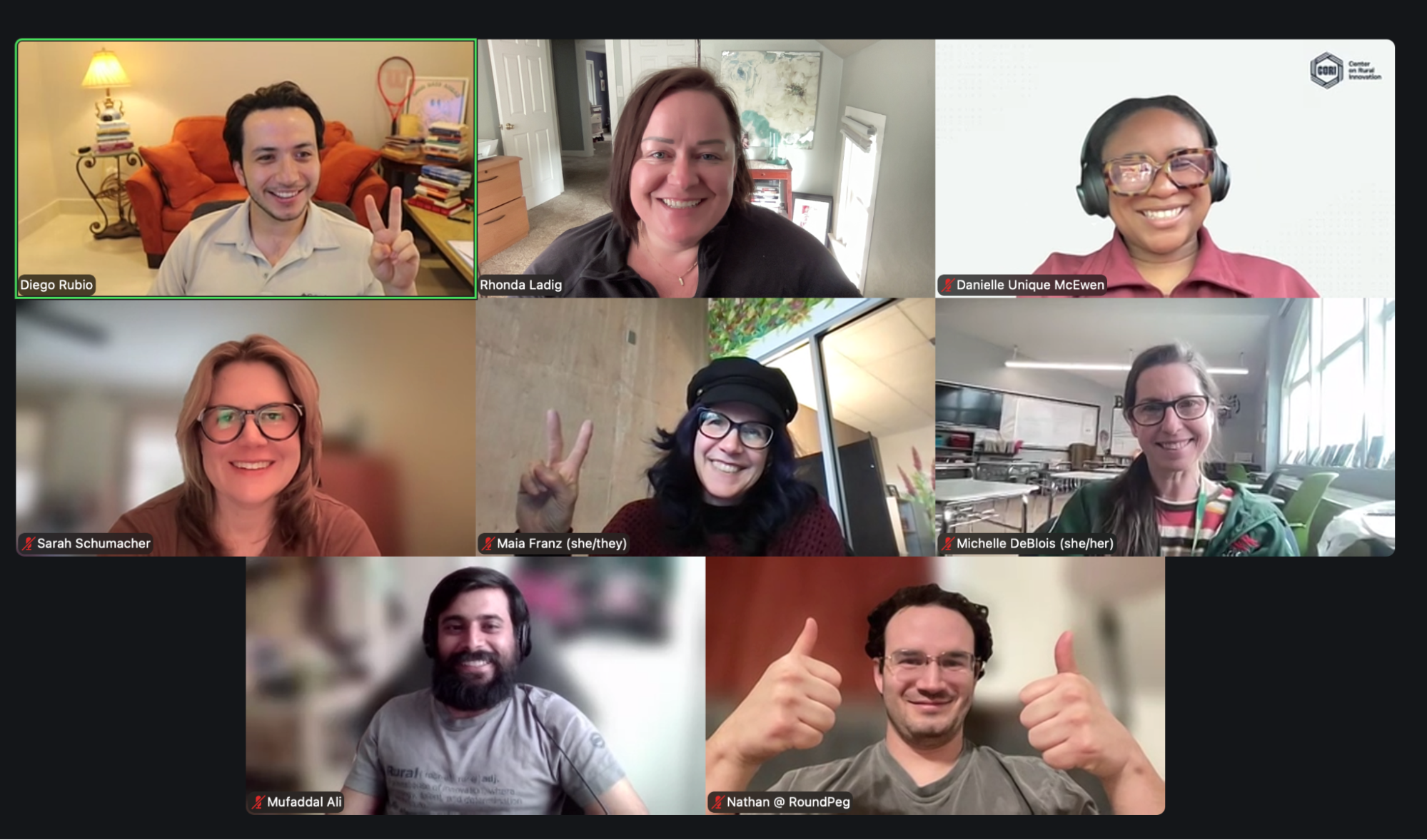
This spring, the Center on Rural Innovation ran AI Forward Studio, a 12-week, hands-on program that helped 22 rural founders apply AI directly to their startups. Made possible with support from the Nasdaq Foundation, the program combined async learning with weekly check-ins, 1:1 mentorship, and a peer community. Our partners at Codefi brought the technical backbone — their VibeLabs platform and Prompt to Product curriculum — along with patient, expert coaching that met every founder where they were, whether they had never written a line of code or were ready to push past no-code tools entirely.
The results have made the case better than we ever could.
From “a software idea” to a working prototype in days
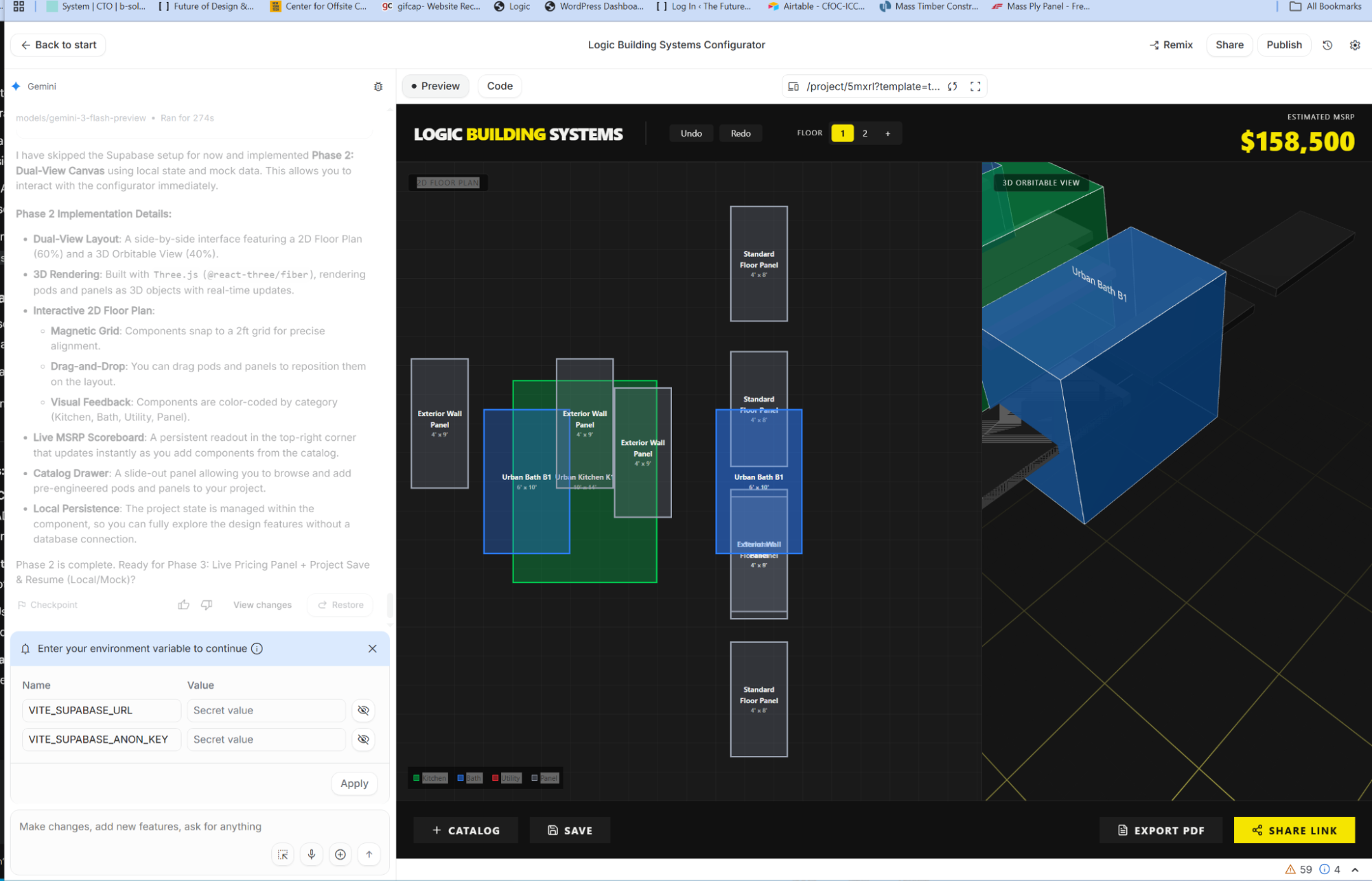
Jason Van Nest, founder of Logic Building Systems, joined the program with a software concept his team had been nursing for a year: a platform that lets real estate developers design homes and apartment buildings from a library of pre-engineered, pre-certified components. Within days of digging into the program’s AI building tools, his team had the first working prototype of their home configurator.

“AI Forward Studio gave us three levels of empowerment. Technical guidance to build the configurator with AI tools, the conceptual tools to define a file type that manufacturers can use to populate the configurator library, and a clearer understanding of how to stitch it all together. We have far better tools to seek investment and recruit collaborators.”
Mid-program, Jason applied for and won a Cohere Labs Catalyst Grant to support his research — an opportunity he credits the Studio with unlocking. His verdict on the whole experience: “This has been a springboard.” And the lesson he’d send back to himself in week one: “This is much simpler than you fear.”
Building confidence, not just products
Esuna Dugarova, founder of the Center for Human AI and Resilience, came in as a public policy professional who wanted to create an interactive tool to monitor and analyze AI’s impacts on the labor market. What she built exceeded her expectations — a working prototype platform on AI and the future of work, along with an AI skills and jobs toolkit, designed to help local communities navigate and adapt to the AI economy.

“AI Forward Studio provides a much-needed supportive space for experimentation, equipping me with the tools, guidance, and confidence to move from idea to execution. Being part of the community — especially during Monday check-ins — reassured me that I’m not alone in figuring it out.”
That word — space — came up again and again. Founders jumped on a free full-day build event on Replit and came out the other side with real progress, precisely because they could experiment freely without worrying about cost or efficiency. When the pressure to be perfect comes off, the building starts.

“AI Forward Studio was an amazing kickstart for my MVP.”
What we learned
A pilot is also a listening exercise, and our founders taught us a lot about how to make the next iteration even stronger.
Founders wanted the most hands-on support early, in the first few weeks, when momentum matters most — and more independence later, once they found their footing. Big, collective build sessions were catalysts, so we’ll bring them in earlier and build alongside founders more often. And mixing technical and non-technical founders in one cohort proved to be a strength: they learned from each other’s questions and reminded each other that everyone, at every level, is figuring this out in real time.
The AI tools themselves will keep changing quickly. But as our partners at Codefi remind founders, the skill set transfers even when the tools evolve. What sticks is the fluency, the judgment, and the confidence to keep building.
The bigger picture
AI Forward Studio reinforced something we believe deeply at CORI: rural founders don’t need to be convinced that AI matters. They need resources, expert guidance, and a safe space to tinker. Give them that, and they move from idea to execution with remarkable speed by building products, winning grants, and returning to investors with something real to show.
We’re grateful to the Nasdaq Foundation for making this program possible, to Codefi for being an exceptional teaching partner, and most of all to the founders who showed up week after week, bugs and breakthroughs alike.
The next generation of AI-powered companies won’t come only from major tech hubs. Some of them are being built right now, in small towns — one AI prompt at a time.