

Rural Communities Shouldn’t Just Host the AI Economy —They Should Share in Its Benefits
As AI data centers expand into rural America, communities should use their leverage to protect local resources, create workforce pathways, and ensure they share in the long-term benefits of the AI economy.
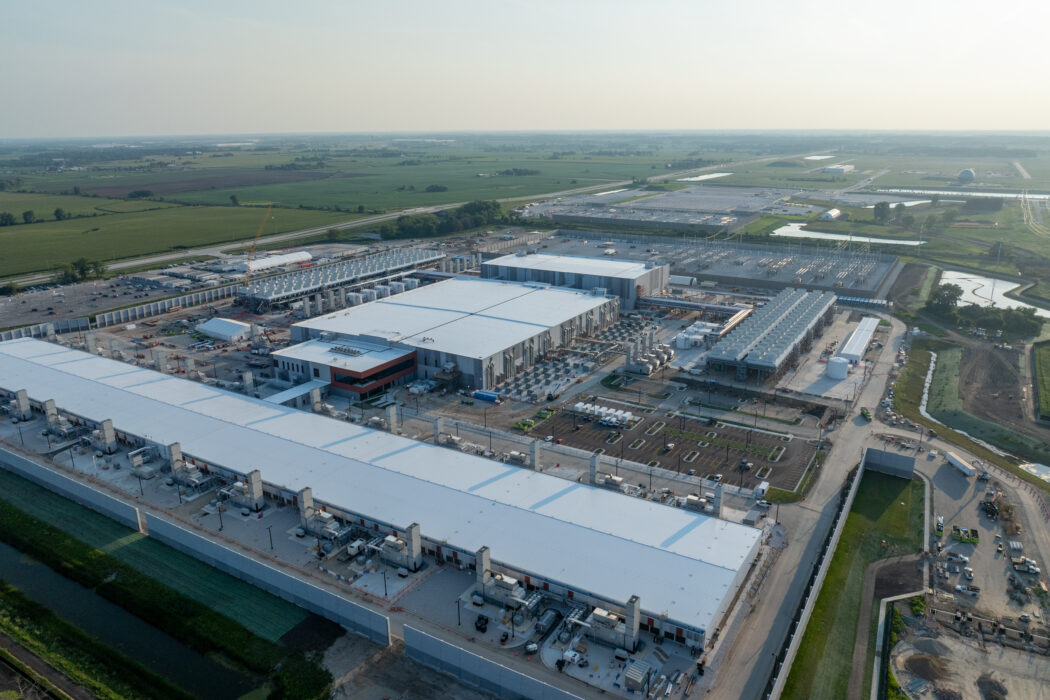
Across rural America, communities are being approached with a version of the same pitch: host an AI data center and economic opportunity will follow. For places that have spent decades trying to replace lost industries and rebuild local economies, that can be hard to ignore. The scale of investment is enormous.
I founded the Center on Rural Innovation to help rural communities address the economic development challenges they have faced for decades: declining industries, population loss, and the growing concentration of economic opportunity in major metro areas. Growing up in rural Vermont, I saw firsthand how deeply those shifts can shape communities and the people who live in them.
Rural communities are increasingly being asked to host the infrastructure powering AI, as companies look for places with available land, reliable power, and lower operating costs. The question is whether those projects will become part of a broader strategy for long-term economic growth or simply large facilities that consume local resources while delivering limited lasting benefit.
A data center is not an economic development strategy.
Data centers can bring real benefits: a stronger tax base, some high-paying jobs, and a multi-year construction boom. In some cases, they can repurpose brownfields or former industrial sites that might otherwise sit vacant. But they also may consume enormous amounts of electricity and water, require significant land, and generate relatively limited long-term economic activity once construction is complete.
Communities should weigh those tradeoffs carefully and on their own terms.
For those that decide to move forward, they should recognize something important: they have more leverage than they think. Tech companies need rural America. They need our land, power capacity, infrastructure, and increasingly, political and community support. Rural communities should use that leverage to negotiate for investments that create broader and longer-lasting economic opportunity.
Here is what to ask for.
Protect your basics. Residents shouldn’t pay more for electricity because a data center has arrived. Water systems shouldn’t come under strain. These projects should leave infrastructure and water resources better than they found it.
Create real local pathways. Make sure local people can access the opportunity. Ask developers to partner with community colleges to build training pipelines before the facility opens. Even if the graduates of those programs are not guaranteed jobs, these skills are applicable to many jobs in a rural region. Require that local businesses have a genuine shot at non-technical subcontracts like landscaping, food services, facilities work.
Investment in economic diversification. As we have learned the hard way, it is risky for a community to be overly dependent on one employer or large scale development. Request a formal agreement, beyond appropriate tax revenue, for long-term investment in entrepreneurship, workforce development, and talent-attracting quality of life infrastructure. A good target is one percent of the project’s capital expenditure over the course of the agreement, usually 20 years. Tax revenue is a floor, not a ceiling.
The choice ahead.
Not every rural community should host a data center. Some may decide the tradeoffs are not worth it. But for communities that do have the land, infrastructure, and interest to support these facilities, the conversation should be much bigger than it has been.
Rural communities should not settle for simply hosting the infrastructure of the AI economy. They should negotiate to participate in its prosperity. This is in everyone’s best interest. Communities avoid the extractive pattern where outside investment takes more than it leaves behind, and companies gain the stable, thriving region that proves their billion-dollar data center investments are successful.
Learn More:
Data Centers: A Guide to Common Questions – Penn State Extension
Rural Community Action Assembly: Planning for Data Center Development – Philadelphia Fed