

East Central Energy (ECE) is a member-owned electric cooperative serving parts of 14 counties in east central Minnesota and northwest Wisconsin. Over the past several years, ECE has expanded its role to include fiber broadband, bringing high-speed, reliable internet to communities that historically had limited options. While ECE’s service territory is broad, this case study focuses on Isanti and Kanabec counties, which together represent a substantial share of the cooperative’s fiber footprint and provide a clear view into how fiber investment is supporting community and economic outcomes.
Like many rural and small-town regions, Isanti and Kanabec counties face changing workforce needs, growth pressures, and rising expectations for modern infrastructure. ECE’s fiber deployment reflects a deliberate approach to meeting those needs by pairing long-term infrastructure investment with a cooperative model rooted in local ownership and trust.

ECE employees at a community event in Isanti County
High-quality fiber and strong adoption reinforce one another
In east central Minnesota, ECE’s fiber investments have expanded access to modern broadband service levels, positioning households and businesses to take advantage of digital tools and services. As a locally governed utility, ECE’s investments are guided by member needs rather than short-term returns, helping ensure that broadband infrastructure is deployed in places that support long-term economic resilience.
Building fiber in this region has not been straightforward. Isanti, Kanabec, and surrounding counties are sparsely populated, with long distances between homes and businesses. In many parts of ECE’s service territory, the cooperative serves an average of seven customers per mile, and some individual fiber drops extend more than a mile due to long rural driveways. These conditions have historically made large-scale fiber investment unattractive for other providers.
ECE chose to take on that challenge. By carefully planning fiber routes and investing with a long-term perspective, the cooperative has been able to deliver high-quality service to its members while keeping prices stable and maintaining a strong customer experience. “Before we built fiber in Kanabec and Isanti counties, they were near the bottom in the state for internet connectivity,” Ty Houglum, Vice President, ECE.
Throughout this case study, charts present data for Isanti and Kanabec counties together as the primary counties, with rural area averages from across the country, Minnesota, and national averages included for comparison. This framing reflects ECE’s fiber footprint and provides a consistent view of regional trends in adoption, economic activity, and workforce outcomes.
Figure 1: Broadband service availability by speed tier and technology

While baseline broadband speeds are widely available across Minnesota and the United States, fiber availability varies more substantially (Figure 1). Across Isanti and Kanabec counties, a significant share (which also exceeds the rural average across the country) of serviceable locations now have access to fiber, reflecting ECE’s investment in scalable, high-capacity infrastructure. Fiber’s reliability and capacity are particularly important for supporting remote work, digital education, and modern business operations.
As highlighted in the Center on Rural Innovation’s (CORI) Beyond Connectivity report, communities see the greatest return on broadband investment when high-quality infrastructure is paired with strong adoption. The combination of fiber availability and high household uptake in east central Minnesota reflects this dynamic in practice.
Figure 2: Broadband adoption rates

Broadband adoption in the primary counties is high and closely aligned with statewide rates (Figure 2). This suggests that households in the region are engaging with broadband in ways comparable to more urban parts of Minnesota, signaling that households in the region are not only able to access broadband service but are choosing to subscribe and use it. High rates of broadband adoption in rural areas enable access to critical services like telehealth, support opportunities for remote and hybrid work, and facilitate business growth (Beyond Connectivity). While demand for broadband service was already high, ECE is driving demand in the business sector by offering value-added services like Calix SmartBiz. The service has been especially popular among hospitality businesses, allowing them to offer their customers reliable, secure wifi connections that are separate from the businesses’ operations networks.
Fiber broadband supports business growth and local economic activity
Once reliable broadband infrastructure is in place and widely adopted, its effects begin to show up in how local economies function. One of the clearest indicators is business formation and growth.
In Isanti and Kanabec counties, trends in business establishments point to steady, sustained growth over time. Since 2010, they have experienced stronger growth in the number of business establishments and have outpaced both rural, state, and national trends since 2016 (Figure 3). This sustained growth suggests a business environment that can support both new startups and existing firms as they expand. While many factors influence business growth, access to reliable, high-capacity broadband is increasingly viewed as a baseline requirement for starting and scaling a business. Fiber enables cloud-based tools, digital payments, online sales, and remote customer engagement, all of which are now standard components of doing business.
Figure 3: Growth in business establishments over time

The presence of structured entrepreneurship support through workshops, counseling, and financing tools are also important for local capacity and ecosystem growth; these supports help to reinforce the impact of fiber infrastructure. Entrepreneurs are more likely to harness broadband for digital marketing, e-commerce, remote delivery, and scaling when supported by these training and financing resources. ECE’s cooperative structure bolsters this impact.
As a locally governed utility, ECE’s investments are guided by and anchored to member needs rather than short-term returns, helping ensure that broadband infrastructure is deployed in places that support long-term economic resilience. Some notable examples of Isanti County support include business planning and technical assistance which are tailored to help entrepreneurs access capital programs and navigate business resources. This includes navigating state resources, such as Launch Minnesota, and regional partners for accessing Federal programs like SCORE and Small Business Development (SBDC) services. Isanti also partners with organizations like the East Central Regional Development Commission (ECRDC) and the Initiative Foundation to connect entrepreneurs with financing, business planning tools, and other regional support.
Other efforts in Isanti provide powerful examples of place-based policies that contribute to small business ecosystem support in the region. This includes how Isanti has been designated as an Opportunity Zone, which provides Federal tax incentives to attract investment and capital for business projects in the community. Additionally, the area’s Main Street Economic Revitalization Program has been integral in funding local business growth efforts. Similarly, Kanabec County is served by the North Central SDBC, which provides no-cost business consulting and training on business planning, financing, marketing, and growth strategies. These services are delivered locally in partnership with the Kanabec County Economic Development Authority (EDA), which contracts with Central Lakes College to deliver these SBDC services in the county. Together, these organizations help local businesses utilize broadband by integrating connectivity into day-to-day operations, growth strategies, and investment decisions.
Connectivity is shaping where people live and how they work
Economic vitality is closely tied to whether communities can retain residents and attract new households. However, business activity alone does not capture the full picture of community health. Population trends provide additional insight into whether places are retaining residents and attracting new households.
Figure 4: Population change over time

The primary counties’ population growth closely tracks, and in some years exceeds, statewide and national trends (Figure 4). This pattern suggests the region is maintaining its appeal even as many rural areas experience stagnation or decline. Reliable broadband supports this by enabling access to education, healthcare, and employment opportunities without requiring relocation.
One of the most visible shifts enabled by broadband is the rise of remote work. Fiber connectivity allows residents to participate in jobs that were previously unavailable in rural and small-town settings.
Figure 5: Share of remote workers
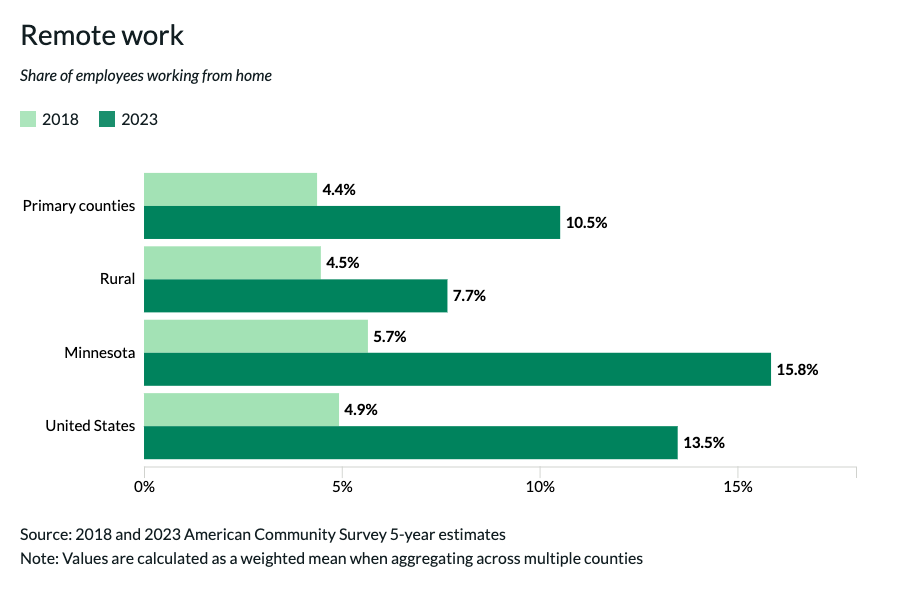
Between 2018 and 2023, the share of residents working from home in both Isanti and Kanabec counties more than doubled (Figure 5). This reflects broader labor market shifts, but also the growing availability of reliable, high-speed internet in the region. Expanded access to remote work helps households increase income stability and allows employers to draw talent from a wider geographic area.
Remote work growth also signals changes in the types of jobs available locally. While not every remote role is tech-based, reliable fiber makes digitally intensive work more feasible in rural and small-town settings.
Figure 6: Share of workforce employed in computer and math occupations
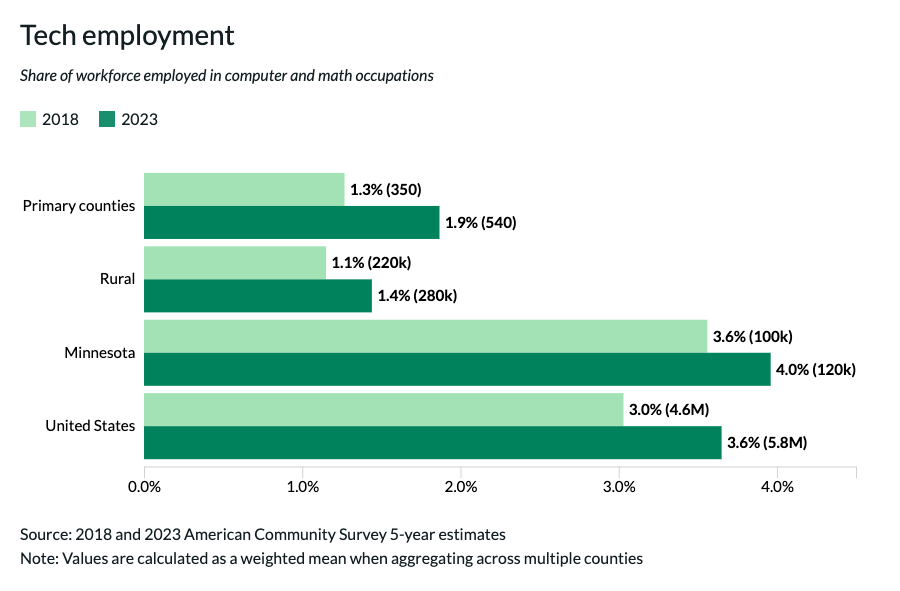
In Isanti and Kanabec counties, the share of workers in tech-related occupations increased between 2018 and 2023, adding over five hundred jobs (Figure 6). While the overall share remains modest, this growth represents meaningful diversification in a rural workforce. As CORI research notes, even small increases in digitally intensive employment can strengthen resilience by diversifying and broadening the local job base. Tech work tends to pay better than other sectors (Dice Tech Salary Report, 2025), and offers better opportunities for remote work (BLS, 2022). In turn, remote work brings money into communities from external sources, helping to grow local economies. Taken together, these trends highlight why broadband adoption matters: high-quality connectivity enables the digital skills and work opportunities that motivate residents to use and fully leverage broadband service.
Community reinvestment extends the value of fiber beyond infrastructure
Infrastructure and economic indicators tell only part of the story. ECE’s impact is also shaped by how it reinvests in the communities it serves. As Houglum stated, “We are driven by our values and cooperative principles – one of them being concern for the community – and our employees take particular pride in that.”
Through initiatives like its Be the Light program, ECE supports local organizations and community priorities across its service territory, awarding nearly $40,000 since its inception in 2023. This program is fully funded by ECE employee and director donations. Scholarships, grants, and partnerships help reinforce education, community capacity, and long-term opportunity alongside broadband investment.
ECE also uses its communications channels, including member newsletters, to highlight local projects and keep members informed about how fiber and electric services are strengthening the region. This transparency and visibility are hallmarks of the cooperative model and contribute to strong member trust.
In one small but illustrative project, ECE partnered with a local school to install a live osprey camera. Enabled by their reliable broadband, the project allowed students and residents to observe wildlife in real time, blending education, technology, and local engagement. This project reflects how connectivity can support shared community experiences alongside economic outcomes.
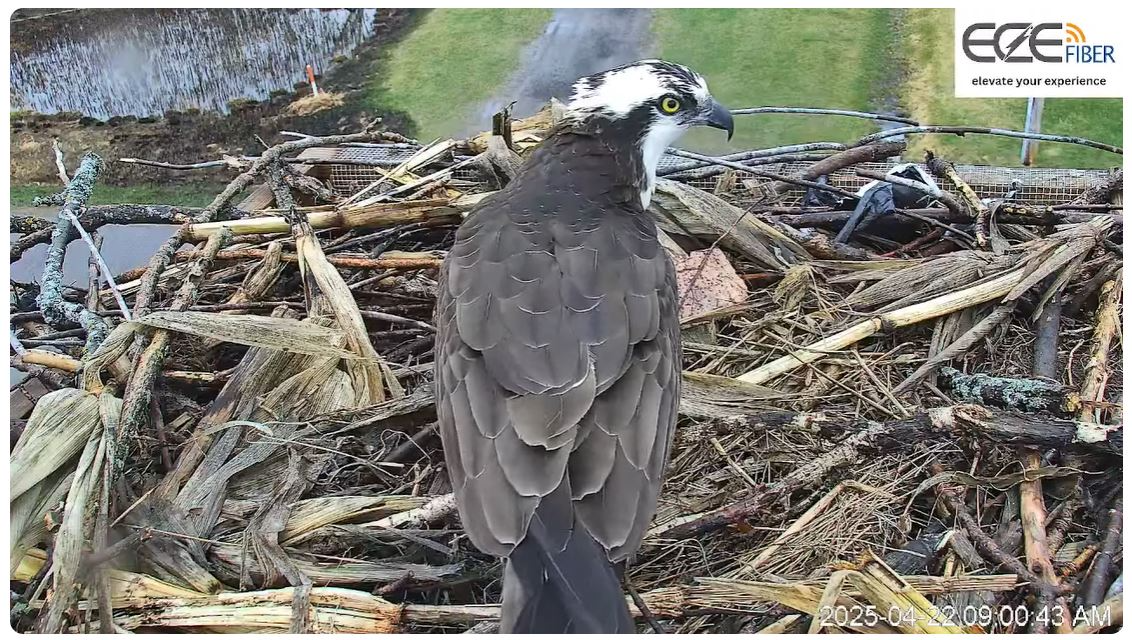
A photo taken from ECE’s osprey cam
ECE regularly hears from members about the difference fiber makes in their daily lives. One resident wrote to thank the cooperative for investing in high-speed internet, noting that “Access to fiber has been life-changing and has opened new professional and personal opportunities.”
Local ownership helps turn connectivity into long-term resilience
Taken together, the data and community examples point to a clear pattern: fiber delivers the greatest value when it is paired with strong adoption, local ownership, community involvement, and long-term commitment.
ECE’s fiber deployment in Isanti and Kanabec counties demonstrates how a locally owned cooperative can play a big role in rural connectivity. By investing in fiber, supporting adoption, and reinvesting in community priorities, ECE is helping position east central Minnesota for long-term economic and social resilience.
As ECE continues to expand its fiber network across its broader 14-county service area, the experience of Isanti and Kanabec counties offers a clear example of what is possible when infrastructure, community trust, and cooperative leadership are aligned.